
REVIEW · BIKE & E-BIKE CITY TOURS
Medellín: History & Local Life Essentials Tour on an E-Bike
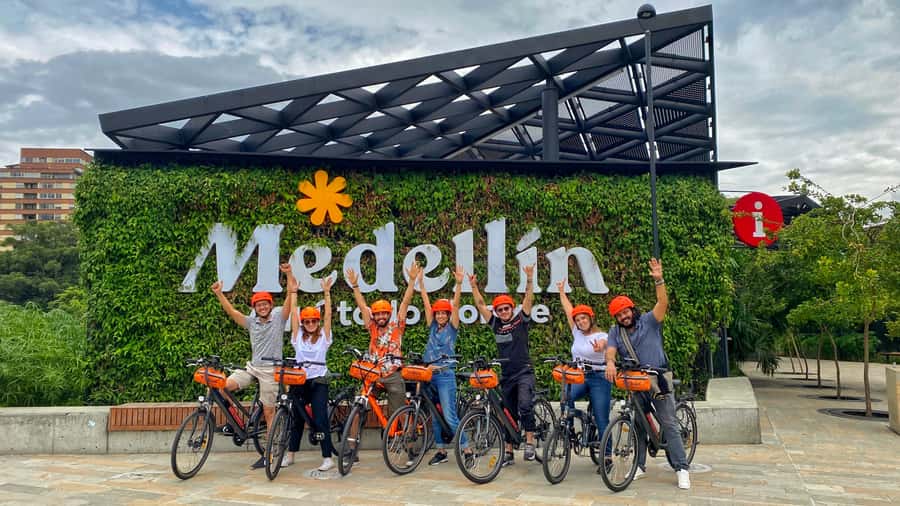
Medellín changes fast when you pedal. This 3.5-hour e-bike tour strings together modern parks, the historic center, and the city’s street-level culture so you’re not just looking at Medellín. You’re riding through it—watching how the skyline, the art, and the people all connect.
I especially like two things: the high-quality e-bikes make stops and starts easy, and the guides bring the places to life with clear, bilingual storytelling. If your guide is Dayana, Juan and Carlos, or Dani/Diana, you’ll likely get that mix of history, local perspective, and a calm, safety-first ride.
One possible drawback to keep in mind: some stretches involve busy intersections and heavy foot traffic near popular areas, so the experience is best if you’re comfortable staying alert and rolling with a group. Also, group size can affect the pace—so arrive ready to share space and listen.
In This Review
- Key highlights you’ll feel fast
- Why an e-bike history ride fits Medellín
- Starting at NOI coworking: gear up and get rolling
- Ciudad del Río and the modern edge of Medellín
- San Antonio Park and Botero’s story about rebirth
- Rolling through the metro viaduct: where the city beats loudly
- Plaza Botero and Parque de las Luces: art, crowds, and context
- Medellín River Parks: the urban oasis effect
- Plaza Mayor on foot: finishing with a classic anchor
- Safety, pace, and the role of your guide
- What’s included (and what’s not) affects value
- Who this tour suits best
- What to bring so the ride feels smooth
- Should you book this Medellín e-bike tour?
- FAQ
- How long is the Medellín history and local life essentials e-bike tour?
- What does the $48 price include?
- Where do we meet for the tour?
- Is the tour in English and Spanish?
- What should I bring?
- Are sandals or flip-flops allowed?
- Who is this tour not suitable for?
- What’s the cancellation and payment flexibility?
Key highlights you’ll feel fast
- Wide coverage in a short time: you’ll hit several neighborhoods and landmarks without feeling stuck in one area
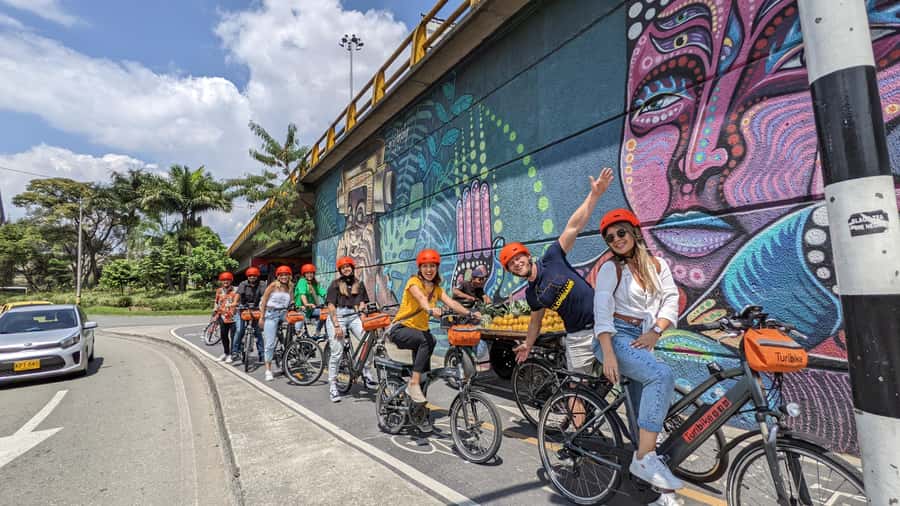
- Street art that actually means something: murals and public design tied to Medellín’s real story
- Botero stops you’ll understand better: sculptures used as a way to talk about damage and rebuilding
- Smooth, supported riding: helmets, rain gear, and included technical help keep things comfortable
- A guide who lives the city: history + how people experience it day to day
Why an e-bike history ride fits Medellín
Medellín rewards movement. The city’s energy isn’t one view—it’s a sequence: hillside neighborhoods, industrial-looking infrastructure, big public parks, and the center’s statues and plazas. On a regular walking tour, you’d spend too much time moving and not enough time noticing.
On this ride, the e-bike does the heavy lifting. It helps you cover distance without turning every stop into a fitness test, which is a big deal if you’re visiting for the first few days. You can focus on what you came for: learning how Medellín formed its identity, then seeing that identity in public spaces.
The other thing I like: the tour doesn’t treat Medellín like a museum. It uses places to explain themes—resilience, creativity, urban planning, and community life—so you leave with a clearer mental map of the city.
More bike and e-bike city tours to roll through Medellin


Starting at NOI coworking: gear up and get rolling
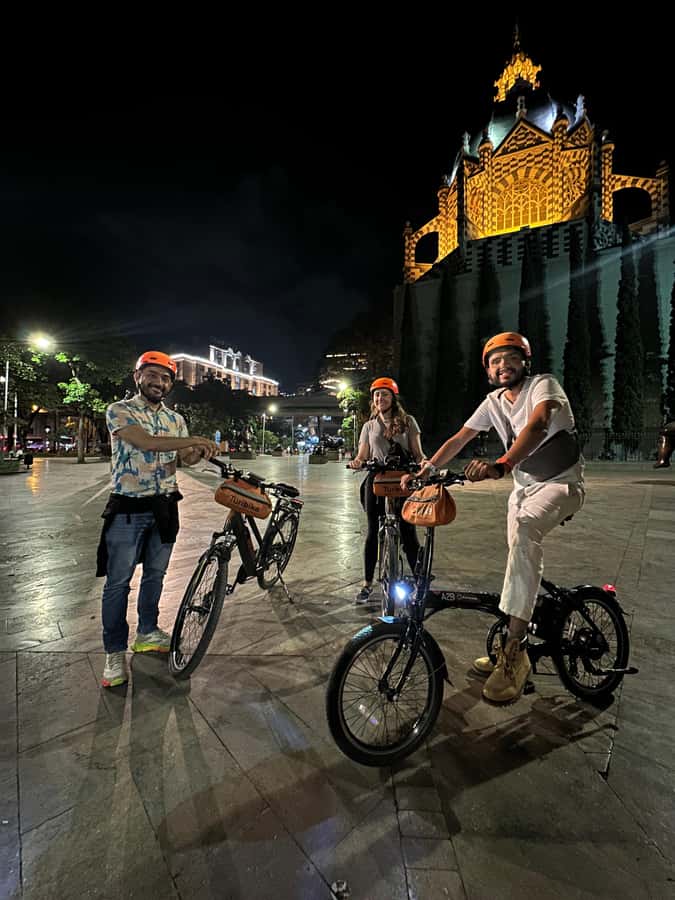
You meet at NOI coworking, at Calle 17 # 43F-287. It’s about a 10-minute walk from Poblado metro station, or roughly a 10-minute drive from Parque Lleras, so it’s convenient if you’re already based in El Poblado.
Setup is part of the experience. You get an e-bike, a helmet, and a rain jacket, which matters because Medellín weather can shift. There’s also medical insurance and technical assistance, so you’re not left scrambling if anything rides up—at least that’s the intention of the operation.
If you’ve never ridden an e-bike before, this tour tends to be built for that reality. Multiple guests highlight that guides help people acclimate and keep the pace comfortable, so you’re not expected to be a street cyclist on day one.
Ciudad del Río and the modern edge of Medellín
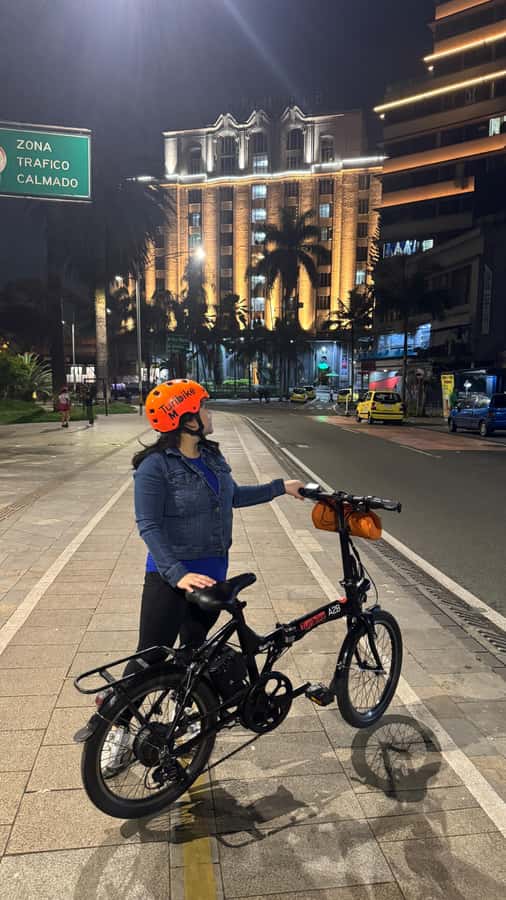
The ride begins in Ciudad del Río, a part of Medellín known for modern public space and strong design. This is where you start seeing the city’s “how we rebuilt” story in physical form.
One early stop centers on the Museum of Modern Art in a brutalist style. The idea here isn’t just architecture for architecture’s sake. You’re meant to connect the building’s bold geometry and raw structure with the city’s own ups and downs—like the architecture is another way Medellín talks about change.
From there, you move toward the Creative District. This is the part of the tour where murals and forward-looking projects help you understand how creativity works as infrastructure—not just decoration. If you pay attention, you’ll notice the city is trying to solve problems with design, art, and public space, not only with buildings.
A practical note: this is one of the more “watch and learn” stretches. If you want great photos, keep your phone charged and your timing ready when the guide stops—short pauses are often where the best angles happen.
San Antonio Park and Botero’s story about rebirth
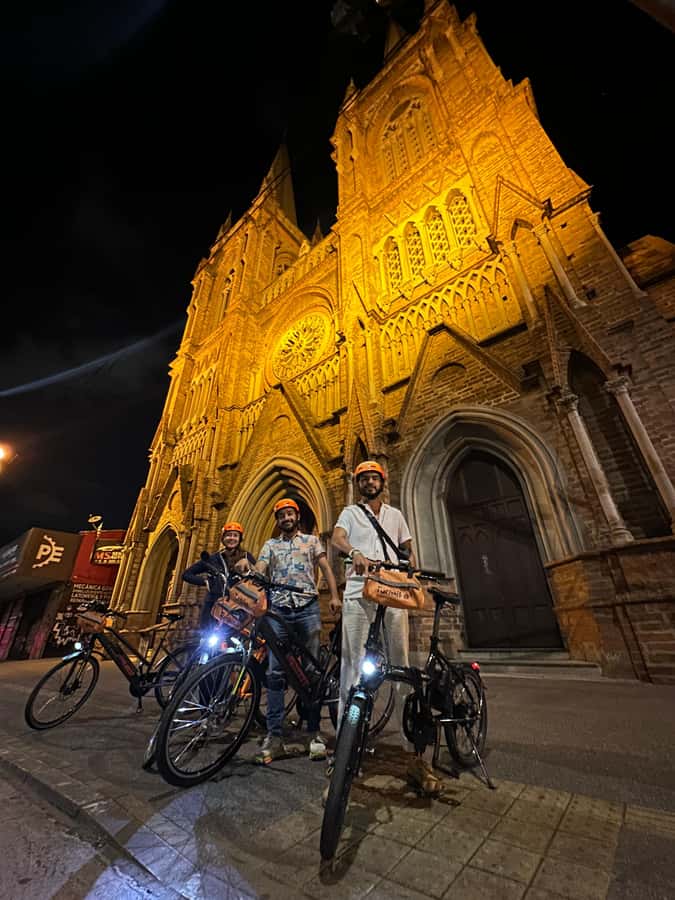
Then you move into the city’s center story—starting with San Antonio Park. This is where the tour switches from “modern Medellín” to “symbolic Medellín,” using public art to explain deeper themes.
At San Antonio Park, two Botero sculptures anchor the message. Guides use them as a way to talk about destruction and rebirth, which sounds abstract until you’re standing there looking at the size, placement, and emotion of the forms. The tour encourages you not to just see the sculptures, but to interpret them as part of Medellín’s cultural memory.
Expect an active atmosphere here. Parks near major downtown areas tend to be busy, and you’ll share space with pedestrians—sometimes at crossings and near popular walkways. If you’re the type who gets distracted by crowds, give yourself a small mental reminder: stay smooth, keep your eyes up, and let the guide handle the route.
Some guides are especially strong at turning these art stops into a lesson about how local people talk about change. If your guide is Dani or Dayana, you’ll likely get those extra details that make you feel like you understand what you’re looking at.
Rolling through the metro viaduct: where the city beats loudly
Between the parks and plazas, you’ll ride through a section of the city defined by transport power: the metro viaduct area. This isn’t just a transfer segment. It’s a chance to see Medellín’s rhythm at street level and understand how movement shapes daily life.
What you’re looking for: the sense that the city is built for flow. The viaduct area shows infrastructure that connects people and neighborhoods. On an e-bike, you can watch the urban texture change as you pass, without losing time to long transfers.
This part of the experience also highlights one reason the tour works with an e-bike: the route is active. You’re not stuck waiting for buses or walking between far-flung points. You get to keep momentum while still stopping when the guide wants you to look closer.
More rides to pedal around Medellin

Plaza Botero and Parque de las Luces: art, crowds, and context
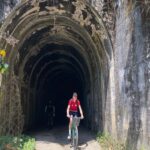
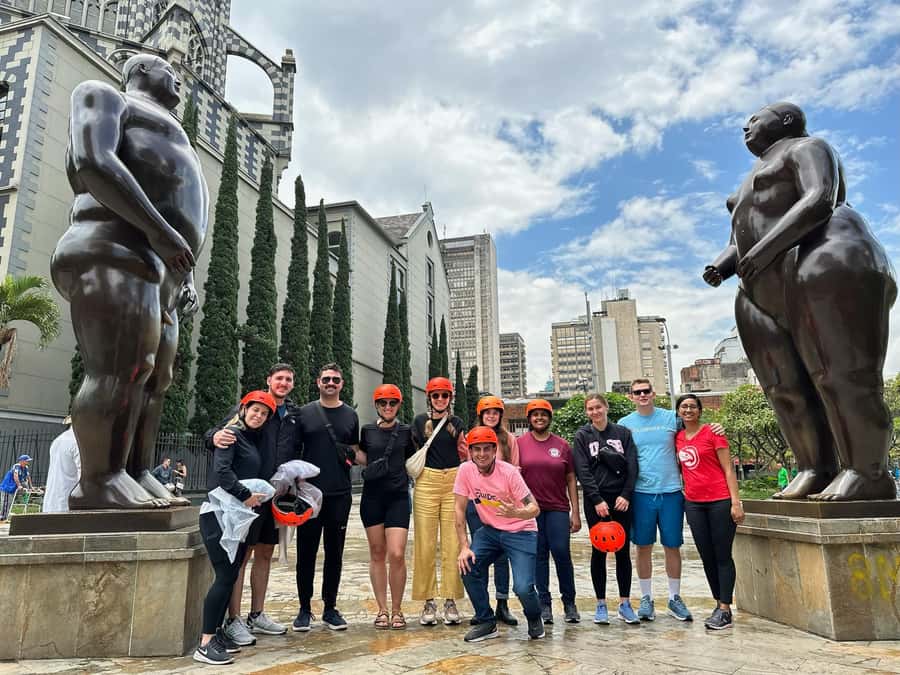
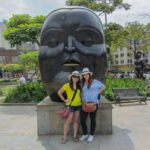
Next comes Plaza Botero, one of Medellín’s best-known central spaces. Here you’ll spend time with both the sculptures and the surrounding energy. Plaza Botero is where beauty and chaos coexist, and that’s exactly the balance the tour tries to teach.
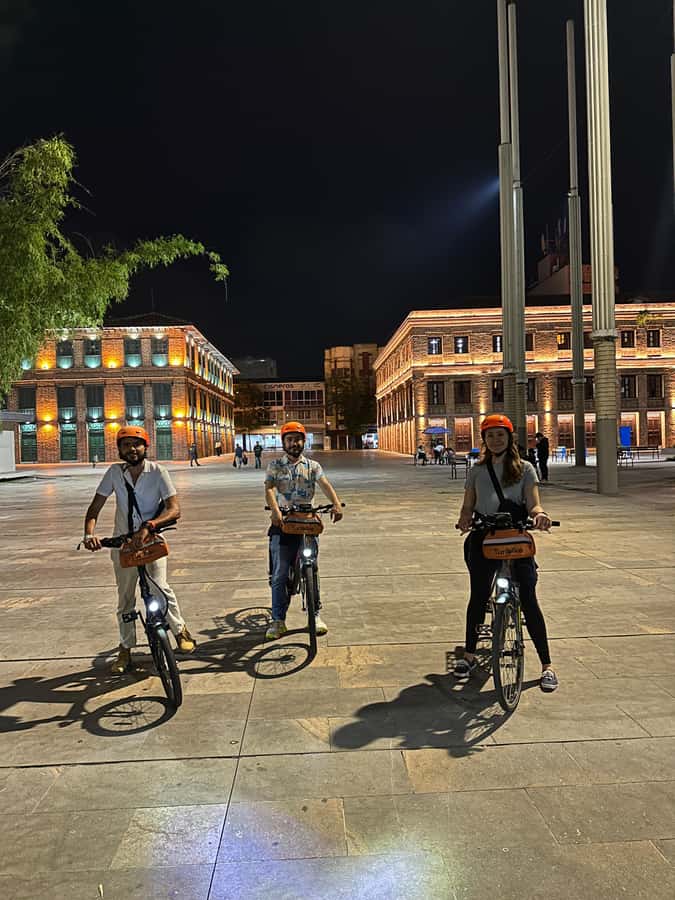
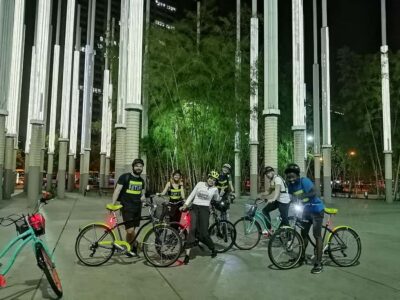
Then the route continues toward Parque de las Luces. This stop is about how public lighting, pedestrian-friendly design, and place-making influence how people experience a neighborhood at street level. Even if you’ve seen photos of the plaza, you’ll likely notice details in person that don’t come through on a screen.
There’s also a “pass by” moment—Perpetuo Socorro—that you’ll notice as part of the route’s story. It’s not the main explanation stop, but passing through helps you connect the dots between areas instead of treating them like separate sightseeing worlds.
If you’re sensitive to noise or heavy foot traffic, plan to stay patient through the busier crossings. One review specifically called out busy road junctions and crowded pedestrian zones near bike paths. That’s not a deal-breaker, but it is a real factor for how comfortable you’ll feel in the middle of downtown.
Medellín River Parks: the urban oasis effect
As you move toward Medellín River Parks, the vibe shifts. This is where you get an “air and space” feeling after time in the center streets.
The river parks area works well for two reasons. First, it gives your body a break from stop-and-go corners. Second, it shows the city investing in public nature as a daily benefit, not a weekend luxury. You ride through designed green space and public pathways that feel like an antidote to the dense urban parts.
If you want to understand how Medellín balances people, traffic, and open air, this stretch is a strong lesson. The guide’s role here is to connect what you see—trees, pathways, riverfront design—with what the city is trying to do socially.
This is also a great segment to take photos and slow down mentally. You can look at how the skyline frames the parks and how the city’s “texture” changes from stone and signage to calmer greens.
Plaza Mayor on foot: finishing with a classic anchor
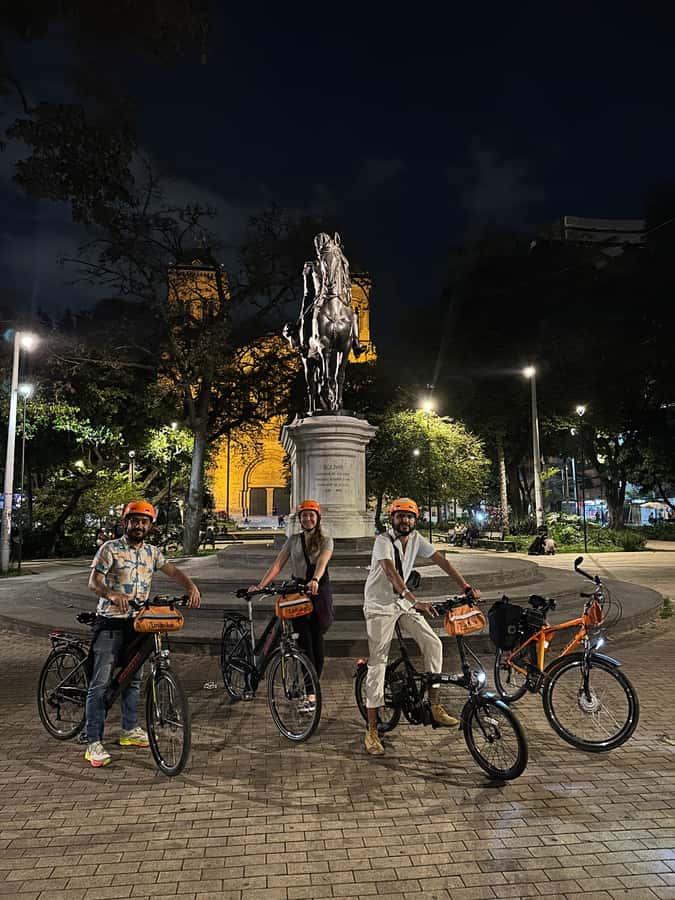
The tour wraps with Plaza Mayor Medellín, where you switch to a short walk. The walk matters because it slows the pace just enough to let the space land.
Plaza Mayor functions like a final landmark anchor: a place that helps you orient yourself and remember what you saw earlier in the ride. It’s the part of the tour where you’re more likely to notice details like building edges, plaza layout, and pedestrian flow.
You end back at NOI coworking, completing the arc: modern design, symbolic center art, riverfront breathing room, then a classic downtown finish.
Safety, pace, and the role of your guide
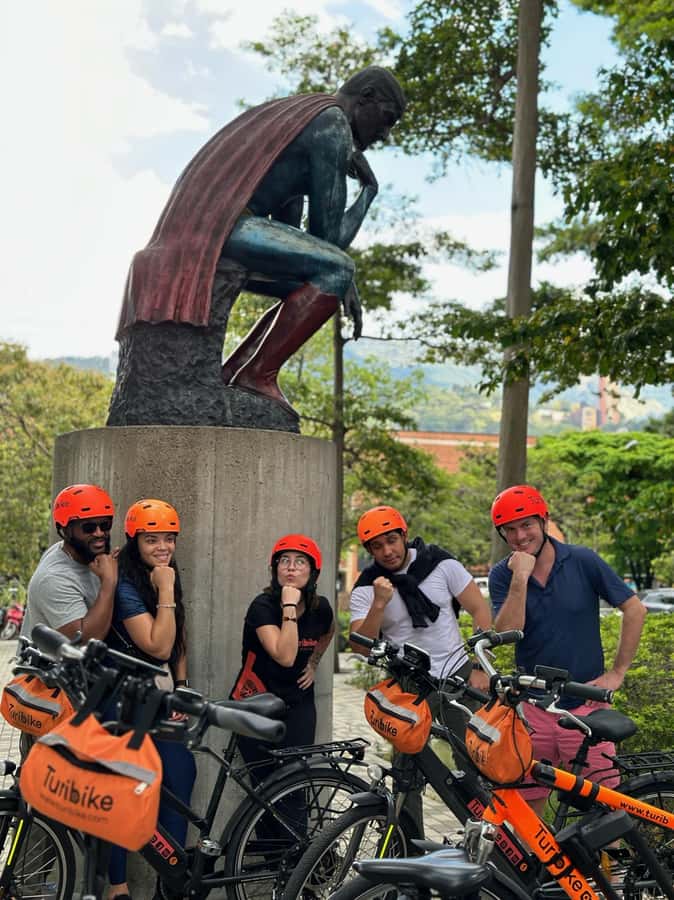
This is one of those tours where the guide changes the feel a lot. A strong recurring theme in the experience is safety-first riding plus real city storytelling.
You’ll see examples of different guide styles: Dayana is described as safe and cautious; Juan and Carlos are praised for making the tour fun and interesting; Diana/Dani stand out for sharing historical and cultural context with patience for beginners; Andres is noted for warm, inquisitive guiding with strong attention to what visitors need to see.
The practical takeaway: if you’re new to e-bikes, look for guides who take time at each landmark and keep the speed comfortable. Several guests mention that the guides were patient and explained how to ride before moving into traffic-heavy crossings.
There can be a drawback related to group size and logistics. One review mentioned a group of 15 felt too large for this kind of tour. That doesn’t mean it will happen to you, but it’s worth considering if you prefer a quieter, more personal pace.
Also note a gear issue can happen. One person reported their gears were not working well and the problem wasn’t handled perfectly. Since technical assistance is included, I’d expect issues to be dealt with, but it’s still smart to be ready to speak up if your bike feels off.
What’s included (and what’s not) affects value
The price is $48 per person for about 210 minutes. For a route that covers multiple neighborhoods and major downtown landmarks, value comes from two places: time saved and effort saved.
You get:
- a bilingual guide
- the electric bike
- helmet and rain jacket
- a refreshing Colombian drink
- medical insurance
- technical assistance
You don’t get transportation to and from the meeting point, so plan your metro or taxi based on where you’re staying. The meeting point itself is walkable from Poblado metro station and reachable from Parque Lleras, which makes planning easier.
About that drink: the tour includes a refreshing Colombian drink, and guests also talk about things like sugar cane juice or coffee. Either way, it’s a nice pause that breaks up the learning rhythm without turning it into a long food stop.
Who this tour suits best
This tour is ideal if:
- you want a first-day orientation to Medellín that isn’t just “walk and look”
- you like street art and public design, not only formal museums
- you want a guided story that connects architecture, parks, and people
- you’re okay riding in an active city environment with stops and crossings
It may not be ideal if:
- you want a quiet, mostly car-free experience without any busy crossings
- you feel uncomfortable around pedestrians in crowded downtown plazas
- you can’t ride a bike or you’re not comfortable learning on the go
It’s also not suitable for pregnant women, people who can’t ride a bike, wheelchair users, and people under 4 ft 6 in (140 cm). If any of those apply, skip this and look for an alternative format.
What to bring so the ride feels smooth
Bring:
- your passport or ID card
- comfortable shoes (no sandals or flip-flops)
If it rains, you’ll have a jacket, but shoes still matter for control and comfort. Also, wear clothes you don’t mind getting a little dusty if you roll through busier streets and park edges.
If you have camera plans, think about storage. You’ll be stopping at several landmarks—photos are part of the fun—so keep your phone accessible without dropping it during starts.
Should you book this Medellín e-bike tour?
Yes, if you want the fastest path to understanding Medellín’s “modern + cultural + resilient” side in one morning or afternoon window. The e-bike coverage makes it practical, and the guides’ storytelling approach tends to connect the dots between parks, plazas, and street-level life.
I’d especially book it if you’re arriving with limited time and want to feel oriented quickly—starting in Ciudad del Río, hitting Botero’s Plaza and San Antonio Park, then finishing with the river parks and Plaza Mayor. The structure helps you build a mental map that makes your later independent exploring easier.
Skip it only if you know you dislike busy crossings and crowded public spaces, or if bike riding isn’t a realistic option for you.
FAQ
How long is the Medellín history and local life essentials e-bike tour?
The tour lasts 210 minutes.
What does the $48 price include?
It includes a bilingual guide, an electric bike, helmet, rain jacket, a refreshing Colombian drink, medical insurance, and technical assistance. Transportation to and from the meeting point is not included.
Where do we meet for the tour?
You meet at Calle 17 # 43F-287 (NOI coworking).
Is the tour in English and Spanish?
Yes. Guides speak both Spanish and English.
What should I bring?
Bring your passport or ID card and wear comfortable shoes.
Are sandals or flip-flops allowed?
No. Sandals and flip-flops are not allowed.
Who is this tour not suitable for?
It’s not suitable for pregnant women, people who can’t ride a bike, wheelchair users, and people under 4 ft 6 in (140 cm).
What’s the cancellation and payment flexibility?
You can cancel up to 24 hours in advance for a full refund. You can also reserve now and pay later to keep plans flexible.
More Tours across Medellin and Antioquia

More Bike and E-Bike City Tours in Medellin
More Medellin Tours and Experiences to Read Next
Not quite your thing? Here is more to do around Medellin, freshly reviewed


Bike & E-Bike City Tours, compared.
 ★ 4.8E-bike and Foodie TourFrom $48102 reviews
 ★ 5.0Colombia cycling tripFrom $2,97463 reviews
 ★ 4.9E-Bike City Tour Medellin with Local beer and SnacksFrom $3655 reviews
 ★ 4.7Bike Tour Medellin with Snacks and Local BeerFrom $3249 reviews
 ★ 4.9Full-Day Mountain Bike Tour with LunchFrom $10514 reviews
 ★ 4.9Guided City Bike TourFrom $4010 reviews
Browse the lists this tour appears in