
REVIEW · PABLO ESCOBAR HISTORY TOURS
Shared Tour Medellin’s Violence & Post-conflict after Pablo
Medellín’s streets still talk about the war. This Violence & Post-conflict tour stays firmly on the period after the Medellín cartel era (not a Pablo Escobar tour), with a clear timeline from 1982 to 2015 and a focus on how city life changed when the gun culture faced ideas. I especially like the objective, not-taking-sides approach and how guides keep the story organized, not chaotic. The possible drawback: the topics are heavy, so you’ll want an open mind and ready questions.
The route is practical and do-able: it starts at Parque San Antonio and finishes at Museo Casa de la Memoria, with walking through the downtown center and a few listening stops. You also get real value for the price because it’s not just “see sights”—you leave with recommendations for material to keep learning and ideas for where to go culturally next.
You’re looking at about 150 minutes on foot (roughly a 5 km walk), in a shared group, with English-speaking guidance. The tour also has clear rules (no video/audio recording, no alcohol or drugs, and rain gear instead of umbrellas), so it feels more respectful and focused than party-style walking tours.
In This Review
- Key things I’d highlight before you go
- Why this Violence & Post-conflict walk works in Medellín’s center
- Parque San Antonio meeting point: getting oriented before the hard stories
- From narcos war conditions to urbanization of conflict (1982–2015)
- 1) It explains the conflict as a set of pressures
- 2) It turns “war zones” into city dynamics
- 3) It connects past to present without forcing drama
- Strategies, heroes, and communities: how Medellín fought back
- Downtown walking segments: resistance and memories in public space
- Ending at Museo Casa de la Memoria: where reconciliation becomes real
- Price and pacing: is it good value for $13?
- What to bring (and what to avoid) so the day feels manageable
- Should you book this tour, or skip it?
- FAQ
- How long is the Medellín Violence & Post-conflict tour?
- Where do we meet for the tour?
- Is this tour about Pablo Escobar?
- What does the tour cover in terms of conflict timeline?
- What’s included and not included?
- What should I bring, and is anything not allowed?
Key things I’d highlight before you go
- Not a Pablo Escobar tour: it’s about the violence system and the post-cartel shift, from 1982 to 2015
- Urban war made human-scale: guerrillas, paramilitaries, and drug traffic explained as city life, not distant headlines
- Bullets for words and ideas: you’ll hear how Medellín’s people worked for change under pressure
- Memory in the open: the walk tracks resistance and remembering while the conflict’s effects linger
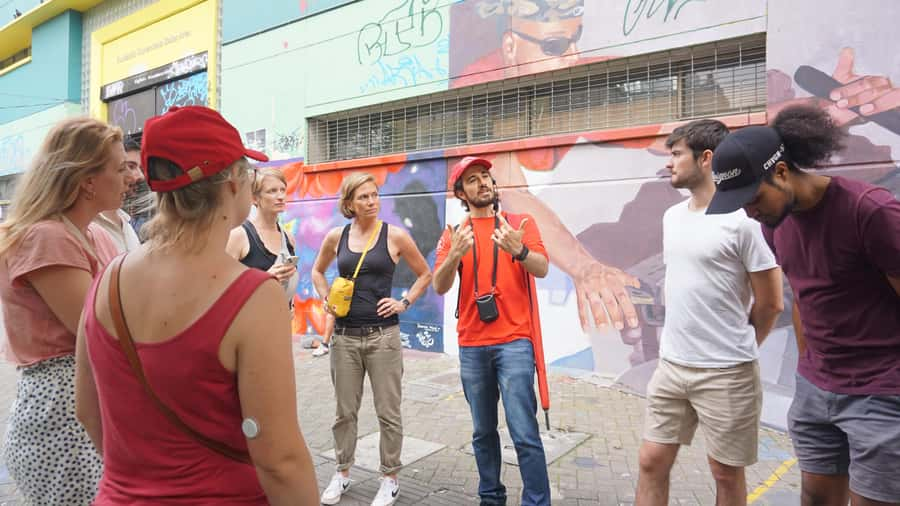
- English guides with energy: guides like Miguel (super thorough) and Sebastian (engaging and fun) set the tone
Why this Violence & Post-conflict walk works in Medellín’s center
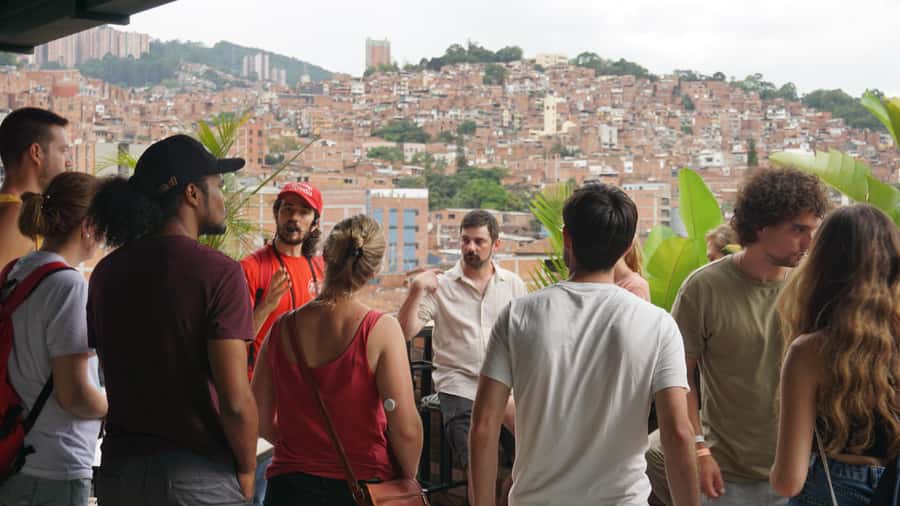
Medellín’s center isn’t just pretty streets and photo corners. It’s where power struggles played out in daily life, where neighborhoods absorbed shock, and where people tried to rebuild routines even when the conflict kept rewriting the rules. This tour is designed for exactly that kind of understanding: not dramatic storytelling, but a grounded look at what war did to society, culture, and economics—and how people pushed back.
I like that the framing is honest: the city had a difficult but important place in the conflict. Medellín can be both an epicenter and an urban victim. That balance matters, because it keeps you from treating violence like a distant spectacle. Instead you learn how urban life gets reshaped—schools, jobs, informal economies, social trust, and the everyday safety habits people adopt without even calling it trauma.
The tour is also explicit about what it isn’t. It’s not an Escobar-themed tour where you chase a single character. You’ll still connect to the drug war era, but the emphasis stays on conditions of emergence and the aftermath—especially what happens after the cartel period, including the idea of donbernabilidad and how the past is still visible today.
We have more tours that tell the sober history of Pablo Escobar and how Medellin moved past it

Parque San Antonio meeting point: getting oriented before the hard stories
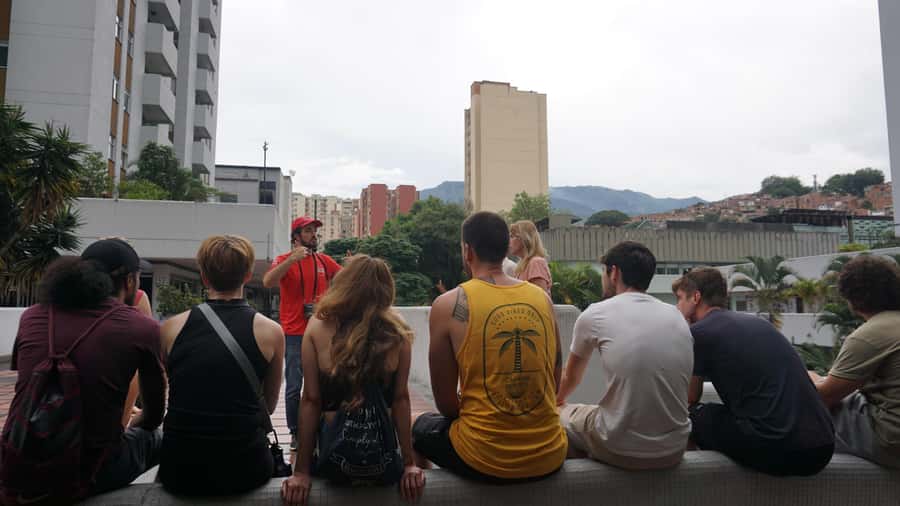
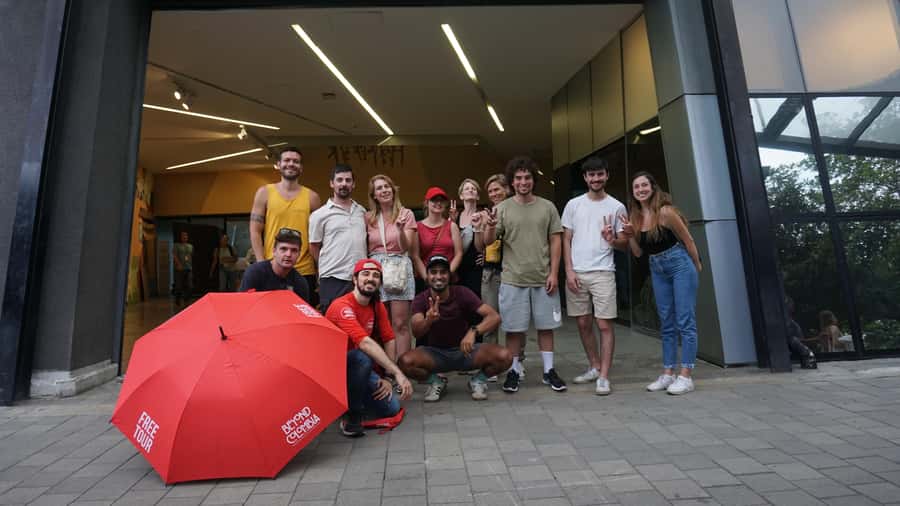
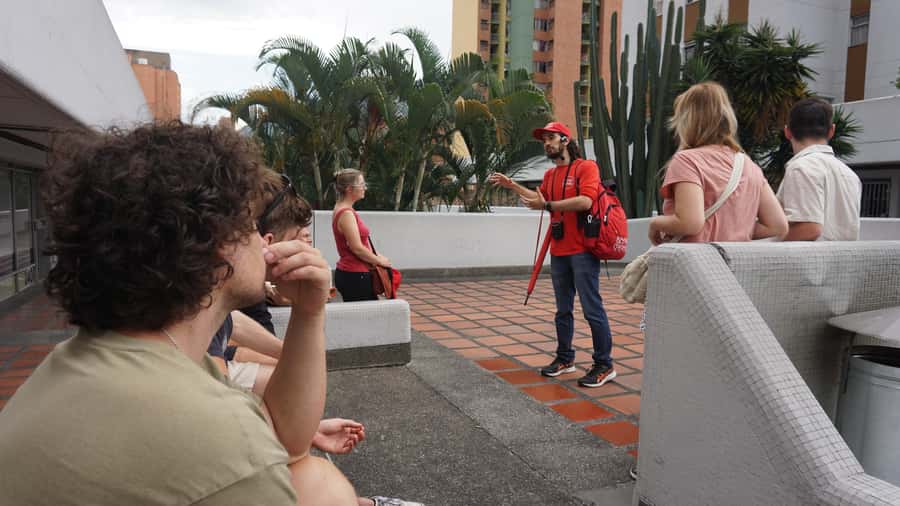
You meet at Parque San Antonio, right by the Botero birds, with Beyond Colombia’s red umbrellas. This is a smart starting point because it’s central and recognizable, so you get your bearings fast—literally and mentally—before you move into topics that won’t feel light.
From the beginning, the guide sets expectations in plain language: this is a walk focused on violence dynamics before, during, and after the cartel era, plus the struggle to survive and create a better future. If you’ve only heard Medellín described as a “comeback city,” this tour gives you the missing context. It helps you connect the dots between a post-conflict narrative and the reality that memory still sits in public spaces.
Practical tip: the tour is structured around listening stops while you walk. That means you’ll want comfortable shoes and a hydration plan from the start. Even with breaks, the route adds up—about 5 km—so you don’t want stiff sneakers or thin soles that hate uneven sidewalks.
From narcos war conditions to urbanization of conflict (1982–2015)
The heart of the experience is a timeline you can feel in your feet. The tour covers changes that violence brought between 1982 and 2015, and it explains what shifted after the Medellín cartel period. Instead of treating “narcos war” as a single era of chaos, you’ll see it as an evolving system with cultural, social, and economic consequences.
Here’s what this part does well for you as a visitor:
1) It explains the conflict as a set of pressures
You’ll hear how the war created conditions that shaped behavior—who had power, how communities adapted, and what everyday life looked like when fear becomes routine. When the guide talks about consequences, you get a sense of how violence doesn’t stay confined to dramatic moments. It touches jobs, neighborhood relationships, and how people plan for the future.
2) It turns “war zones” into city dynamics
A key theme is the urbanization of war: guerrillas, paramilitarism, and drug traffic described as forces that moved through urban spaces, not only remote areas. That matters because Medellín is a city you experience by walking and riding transit. When you understand how conflict shaped the city’s structure, you start seeing why certain areas feel different, why certain social patterns form, and why resilience looks specific—not generic.
3) It connects past to present without forcing drama
The tour’s approach is factual and framed to be objective. That doesn’t mean it’s cold. It means you’re not pushed into taking sides or “picking a villain.” You’re helped to understand motivations and practices as part of a broader conflict machine—and then how that machine left lasting scars.
A small consideration: if you’re sensitive to dark topics, plan your energy. This is not a “light and breezy” city walk. Come prepared to process and ask questions. The guide explicitly welcomes them, and that’s often where the experience becomes most meaningful.
Strategies, heroes, and communities: how Medellín fought back
One of the most valuable parts of this tour is the focus on people, not just perpetrators. Yes, you learn about armed dynamics. But the tour keeps returning to strategies, heroes, and communities—how ordinary people managed pressure and still created ways to live better.
The tour frames this as a social struggle and a process of change. A phrase you’ll hear is the shift from bullets for words and ideas. That’s a big message, and it lands better when you’ve been through the timeline first. After you understand what fear did to daily life, you can appreciate what it means when communities choose education, organizing, memory, and civic action instead of violence.
This is where the guides’ teaching style really matters. In past tours, the guide names Miguel and Sebastian come up for a reason. Miguel is described as super thorough—exact, organized, and strong on context. Sebastian is described as engaging and fun, which helps when the content turns heavy. Both strengths work together: facts first, then human-scale explanation.
If you want the best experience, ask about the “how.” How did people organize? How did communities protect culture? How do you rebuild trust after the conflict changes the rules? The tour’s design seems built to handle those questions without dodging them.
Downtown walking segments: resistance and memories in public space
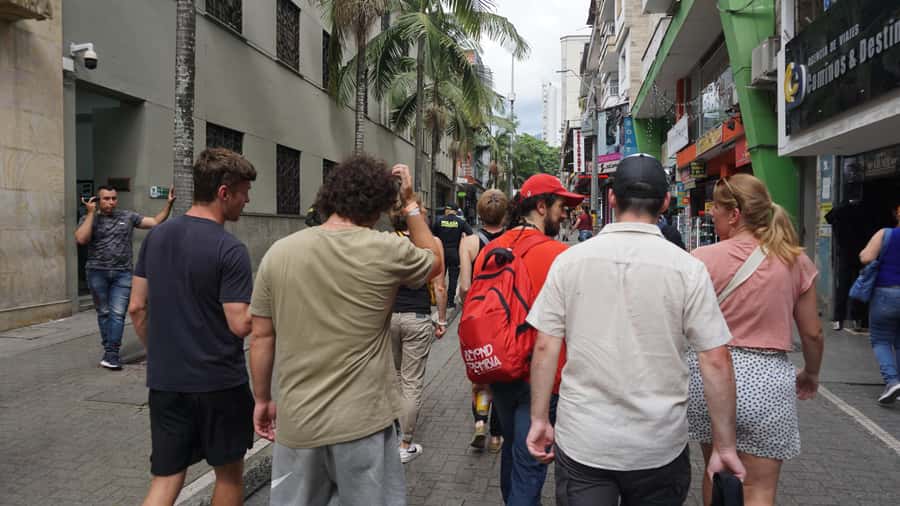
As you move through downtown, the tour’s theme becomes easier to see: resistance and memories aren’t stored in one museum room. They live in a city that has to keep functioning, even while conflict effects remain part of the background.
This section is also where the tour’s pace feels important. You’re walking through central Medellín, so you get the sensory side—street life, sounds, movement, the feel of a real city. At the same time, the guide anchors what you see to the story: how violence shaped neighborhoods and social life, and how people responded with persistence.
What I like here is that the tour doesn’t pretend the past is over. It treats transformation as ongoing. That’s the difference between “history tour” and “post-conflict tour.” You’re not just learning what happened; you’re learning why it still matters to how the city behaves today.
There’s also a subtle lesson about urban space. When conflict urbanizes, it leaves behind patterns: fears, informal rules, and social scars that can be harder to notice than bullet holes. By the end of the downtown segments, you’ll be able to read the city with more care, not more paranoia.
Ending at Museo Casa de la Memoria: where reconciliation becomes real
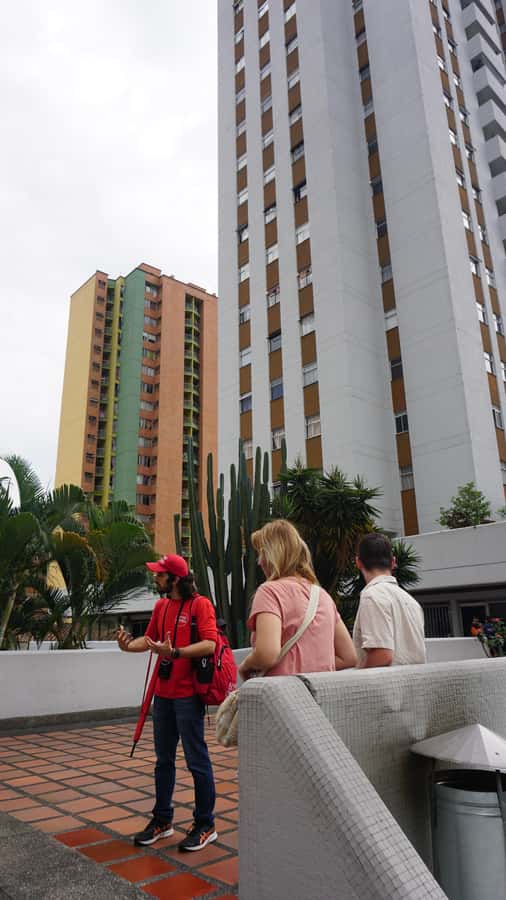
The walk finishes at Museo Casa de la Memoria. For many people, a museum ending is exactly right after hours of context. Not because a museum “fixes” anything, but because it offers a place to hold memory with intention.
The tour’s closing emphasis ties together the themes you’ve been hearing: transformation, resistance, and the way the city carries remembrance while it moves toward peace. You’ll also connect the topic to modern peace agreements and reconciliation in an urban context—because reconciliation in a city means dealing with everyday consequences, not just signing papers far away.
A practical note: since this is a shared walking tour, you’ll likely leave with a mix of energy levels in the group. Some people want to talk more, others want quiet reflection. Either response is fine. The tour’s content is built for understanding, and you can keep it with you in your own way.
Price and pacing: is it good value for $13?
At $13 per person, the value is strong—mostly because the tour gives you structure. This is about 150 minutes, and you’re walking roughly 5 km with stops. You’re paying for an English-speaking guide, objective framing, and sighting of important central locations tied to the conflict and reconciliation story.
You’re also not paying extra for tickets or entrances; the tour avoids sudden added costs. That matters because walking tours can quietly balloon when museums and transit get added. Here, the plan is intentionally built around walking through the center with context-led stops.
The only cost you should plan for is what’s not included: drinks, food, souvenirs, and transportation to/from your hotel. You’ll want to handle hydration yourself, and because you’re walking a fair distance, I’d treat water as part of your prep, not an afterthought. Also note the rule set: alcohol and drugs aren’t allowed on tour, and recording (video or audio) isn’t allowed. That keeps the experience focused, but it means you won’t be multitasking with your phone camera.
One more value angle: the guide also offers recommendations for material to keep yourself informed and suggestions for Medellín’s cultural offer centered on the places you visit. That turns a 2.5–3 hour tour into a starting point for your own next steps.
What to bring (and what to avoid) so the day feels manageable
This tour gives you a short checklist, and I agree with it. The better prepared you are, the less the heavy content fights with your comfort.
Bring:
- Comfortable shoes (you’ll walk about 5 km)
- Comfortable clothes
- Water or your preferred hydration
- Sunblock
- Rainproof clothing (umbrellas/capes are not allowed)
Could be useful in rainy season (March to June):
- Mosquito repellent
Keep in mind:
- Some crowded areas are part of the route, so keep belongings close
Rules to plan around:
- No alcohol and drugs
- No video recording and no audio recording
- No party groups
If you’re traveling with friends, agree on a simple plan to stay together. The tour is shared, and the route passes through crowded parts, so a quick meeting strategy helps.
Should you book this tour, or skip it?
Book it if you want a Medellín that makes sense beyond skyline photos. You’ll get an organized story from 1982 to 2015, a focus on urban war dynamics, and a respectful look at how people shifted from violence toward words and ideas. The ending at Museo Casa de la Memoria also gives you a satisfying “close the loop” moment.
Skip it (or choose a different type of tour) if you want a light, entertainment-first walk, or if heavy conflict themes will overwhelm you. This is the kind of tour where you’re encouraged to ask questions and bring an open mind.
If you’re deciding based on guide style, know that Miguel is known for thoroughness and Sebastian for an engaging, fun way of explaining. That combo—clear facts plus human delivery—tends to be exactly what you need for this subject.
FAQ
How long is the Medellín Violence & Post-conflict tour?
It lasts about 150 minutes (around 3 hours).
Where do we meet for the tour?
You meet at Parque San Antonio, next to the Birds of Botero, with Beyond Colombia guides using red umbrellas.
Is this tour about Pablo Escobar?
No. It is not a Pablo Escobar tour. The focus is on Medellín’s violence and post-conflict dynamics after the cartel period.
What does the tour cover in terms of conflict timeline?
It looks at changes from 1982 to 2015, including what happened after the Medellín cartel and how the past is present today, with reconciliation in an urban context.
What’s included and not included?
Included: an English-speaking tour guide, objective knowledge of Medellín and Colombian history, sightseeing in the center framed in the conflict and reconciliation story, and recommendations for further reading and cultural offers. Not included: drinks/food/souvenirs, transportation to/from your hotel, and tickets or entrances.
What should I bring, and is anything not allowed?
Bring comfortable shoes, comfortable clothes, sunblock, and water (plus rainproof clothing since umbrellas/capes aren’t allowed). Avoid alcohol and drugs, and don’t plan to record with video or audio. Children under 18 and wheelchair users are not suitable for this tour.
More Tours across Medellin and Antioquia
More Pablo Escobar History Tours in Medellin
More Medellin Tours and Experiences to Read Next
Not quite your thing? Here is more to do around Medellin, freshly reviewed


Pablo Escobar History Tours, compared.
 ★ 4.8The Real Pablo Escobar TourFrom $423,205 reviews
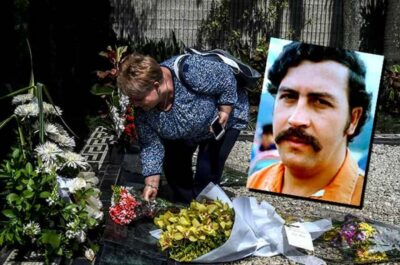 ★ 4.7Pablo Escobar Tour with beer includedFrom $31612 reviews
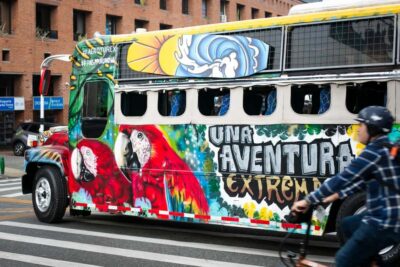 ★ 4.7Guatapé Day Trip & Boat to Pablo Escobar’s EstateFrom $64365 reviews
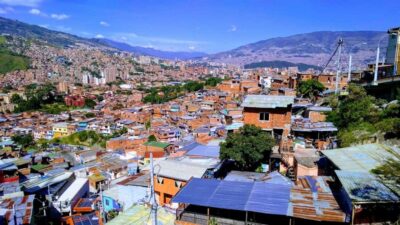 ★ 4.9Private Pablo Escobar and Comuna 13 TourFrom $81233 reviews
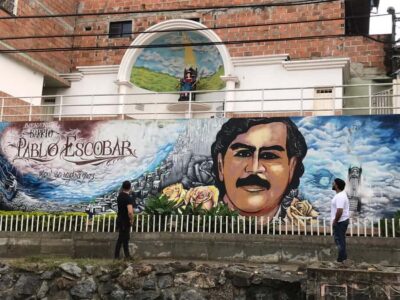 ★ 4.8Private Pablo Escobar Tour with Cable Car RideFrom $73228 reviews
 ★ 4.9From Medellín: Private Pablo Escobar History TourFrom $6384 reviews
 ★ 4.8Medellin Pablo Escobar TourFrom $5581 reviews
 ★ 5.0(Private Guatapé) Mansion Pablo Escobar+Paintball+Cuatrimoto+BoatFrom $23573 reviews
Browse the lists this tour appears in