
REVIEW · PABLO ESCOBAR HISTORY TOURS
Do Not Say That Name
Medellín refuses to stay in the past. This Pablo Escobar-themed tour ties cartel-era trauma to real places you can stand in, with a private guide and a choice of morning or afternoon.
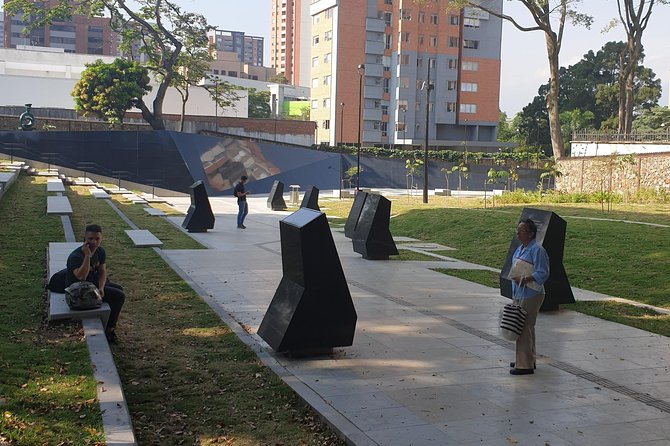
My favorite part is the Parque Memorial Inflexion stop on the former Edificio Mónaco lot, because it turns a scary chapter into something you can read with your eyes. One thing to consider: this experience is about Medellín’s impact and change, so don’t expect an all-day drive to far-flung Escobar sites.
I also like the pacing. You get several focused stops—Parque Memorial Inflexion, a cemetery pause at Jardines Montesacro, and Parque San Antonio—without drowning in trivia.
In This Review
- Key highlights in plain terms
- Medellín’s Escobar story, told in places you can actually see
- Parque Memorial Inflexion: the Edificio Mónaco story in one stop
- A brief, respectful moment at the Shrine of the Virgin Mary
- Jardines Montesacro cemetery: short visit, heavy feelings
- Parque San Antonio: where the war against Escobar shifts
- Comuna 13, murals, and the escalator effect
- How your bilingual private guide changes everything
- Duration and pacing: 4 hours sounds short, until it isn’t
- Price and logistics: what $78 gets you
- Is this tour value-first or Narcos-first?
- Who should book this Medellín tour?
- Should you book Do Not Say That Name in Medellín?
- FAQ
- How long is the Medellín tour?
- Where does the tour take place?
- How much does it cost?
- Is this a private tour?
- What’s included in the price?
- Are food and drinks included?
- Can I choose a morning or afternoon tour?
- Is free cancellation available?
Key highlights in plain terms
- Memorial sites first, not a hype show: you’ll start at Parque Memorial Inflexion tied to the old Edificio Mónaco.
- Free-entry stops keep the cost sensible: multiple key viewpoints include free admission tickets.
- A private, bilingual guide for your group: guides like Juan Carlos and Héctor are praised for energy and city pride.
- Medellín’s modern public transport shows up: some routes include the escalator and the metro cable line as part of the story.
- Short stops that still aim for context: time is limited, so your guide’s explanation matters.
Medellín’s Escobar story, told in places you can actually see
This is the kind of tour that makes you slow down. You’re not just hearing about a cartel legend; you’re moving through Medellín’s physical geography—spots where the city’s violence happened, and spots where it learned to rebuild.
The tour is designed for a 4-hour window, so the format is “hit the key points, then connect the dots.” If you want a full day of deep research, you might feel shortchanged. But if you want a guided, human-sized way to understand why Medellín looks the way it does today, this works.
Also, it’s private, meaning it’s only your group. That’s a big deal with a topic like this, where you’ll probably have questions about what’s true, what changed, and what’s been re-built.
We have more tours that tell the sober history of Pablo Escobar and how Medellin moved past it

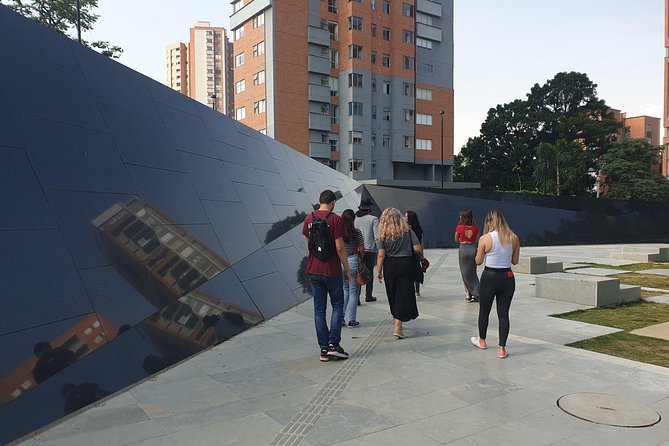
Parque Memorial Inflexion: the Edificio Mónaco story in one stop
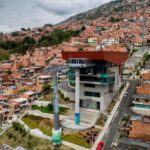
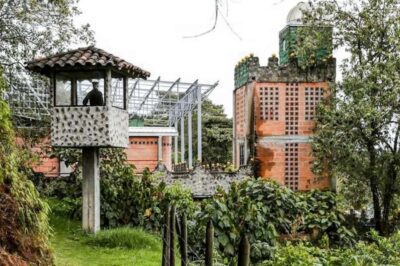
Parque Conmemorativo Inflexión sits on the lot where the old Edificio Mónaco stood—an icon of pain and violence and linked to Pablo Escobar’s property history. The stop is short—about 15 minutes—and admission is free, but the point isn’t “see and move on.” It’s to get oriented around what happened there and why the city chose to mark the place.
This is a good first stop because it sets tone fast. Instead of starting with graffiti or a dramatic anecdote, you begin with a memorial space. That helps you understand why later viewpoints about the war, the aftermath, and the reinvention carry weight.
Practical note: even with a short visit, this is the kind of stop where your guide’s narration matters. If your guide has good English (or you’re comfortable asking follow-ups), you’ll get a clearer timeline.
A brief, respectful moment at the Shrine of the Virgin Mary
Between the larger memorial themes, you may also stop at a shrine of the Virgin Mary, where pilgrims ask for miracles. It’s not a cartel-history detour for its own sake. It’s a reminder that Medellín doesn’t live only in the past—it also lives in faith, hope, and daily resilience.
Because this is a pilgrimage site, keep your behavior respectful. Dress normally, speak quietly, and treat the stop like you’re visiting a place of belief, not a photo backdrop. The tour time is limited, so you likely won’t linger long—but those few minutes can shift the emotional tone of the route.
Jardines Montesacro cemetery: short visit, heavy feelings
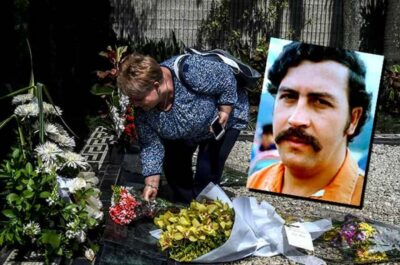
Next comes Cementerio Jardines Montesacro, a quick but emotionally loaded stop. Plan on roughly 20 minutes, with free admission.
A cemetery stop can feel blunt if you’re expecting a cinematic Escobar “greatest hits” tour. But that’s part of why it’s powerful. Cartel violence wasn’t abstract. It shows up in names, graves, and family grief. Even when a guide keeps it brief, you’re meant to absorb the reality.
One specific detail you might hear, depending on your guide’s focus: a stop associated with Griselda, sometimes referred to as La Viuda Negra. Some versions mention her connection to Pablo Escobar’s world, though the cemetery visit is still meant to be short.
If you’re bringing kids or teens, this is where your guide should be careful with tone. If they’re good at plain-language storytelling, the cemetery becomes a lesson in consequences rather than shock value.
Parque San Antonio: where the war against Escobar shifts
At Parque San Antonio, the tour aims to explain how the conflict changed—how the war against Escobar evolved. This stop is also relatively brief (around 15 minutes), with free admission.
What I like about placing a “turning point” stop in a park is that you can stand there and connect the story to the city. It’s not just an explanation in a moving car. You get a moment to think.
The downside is obvious: 15 minutes can’t cover everything. If you’ve watched shows like Narcos and you want exact dates, court-like precision, and step-by-step outcomes, you may want to ask your guide for specifics. The tour is built to give direction, not to become a one-tour encyclopedia.




Comuna 13, murals, and the escalator effect
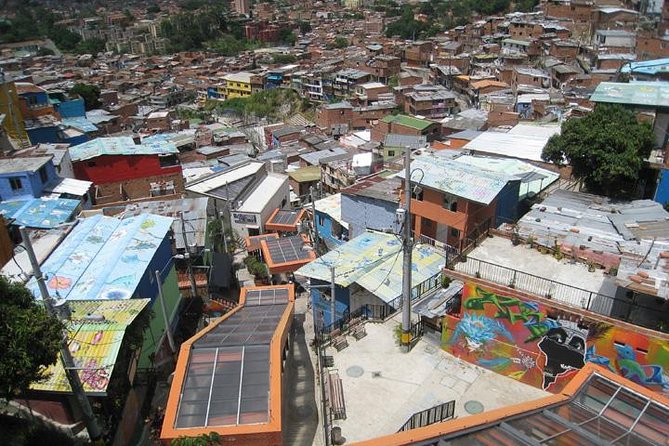
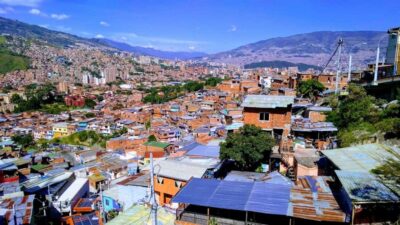
Even when a tour’s written stops list looks small, the real “Medellín feel” often comes from neighborhoods and routes. In this experience, Comuna 13 shows up as an important part of the city transformation story.
You’ll likely connect the cartel-era chaos to later cultural growth. One major theme from guide storytelling is how Medellín’s turbulence helped shape local identity, including the growth of hip hop culture within communities. The emotional logic is simple: out of violence came new voices.
Several guides also fold in a memorable piece of Medellín infrastructure: the escalator and the metro cable line. In one praised experience, the guide rode the escalator to the top, showing how it changed daily life—giving you a visceral view of how murals, homes, and street-level movement connect in a steep hillside city. Then the route includes a cable car system that functions as real public transportation, not a tourist toy.
Why this matters for you: Medellín’s hills can make you think “this city is hard to reach.” Seeing the escalator and cable line in action makes it clear why the city leaned into mobility projects as part of rebuilding. You’re not just hearing that communities improved. You’re watching infrastructure do the work.
How your bilingual private guide changes everything
This tour is only as good as the guide you get. That sounds obvious, but with a topic like Escobar and a format that depends on narration, it becomes the whole game.
The good news: guides like Juan Carlos and Héctor receive strong praise for being enthusiastic and for showing pride in Medellín. In one example, the guide’s energy made the story feel alive, and the route included both the transformation in Comuna 13 and the modern transit experience.
The mixed news: a minority of feedback points to guide issues—English skills that weren’t strong enough for deeper discussion, narration that felt scattered, and answers that didn’t fully satisfy big questions (like how Pablo Escobar died). In those cases, the tour can feel too thin.
My advice if English matters to you: before you go, ask the operator what languages the guide will speak in your group. And once you’re in the car, don’t be shy about setting expectations. If you want chronology, ask for it early. If you want more detail on a specific moment, ask for it while you still have time.
Private guide note: because it’s your group only, you can steer the conversation. That’s the advantage of a private tour on a tight timeline.
Duration and pacing: 4 hours sounds short, until it isn’t
Four hours can feel either perfect or too tight, depending on your goal.
Here’s what the structure suggests: you’ll spend time walking or standing at multiple viewpoints, with short explanations at each. That means the tour works best when you treat it like an orientation session with storytelling, not a full documentary.
If you’re the kind of person who asks follow-ups and wants deeper background, you might wish for longer time at fewer stops. If you like seeing a range of key locations with a guide’s “here’s what it means” approach, the timing is a strength.
Also consider this: some landmarks tied to Escobar’s story have changed over time. So the value of the tour is not “finding a perfect preserved relic.” It’s understanding how the city now frames its past.
Price and logistics: what $78 gets you
At $78 per person for about 4 hours, this tour looks like a fair deal for a private, guided experience—especially because you’re not paying extra for entry at several major stops. The key memorial sites listed include free admission tickets.
What’s included:
- Bilingual guide
- Private transportation
- Medical assistance
What’s not included:
- Food and drinks (unless specified)
- Personal expenses
That inclusion list matters. Private transport and a guide make this easier in Medellín than trying to stitch the route together yourself. And having medical assistance listed is a practical safety net for a city tour on a schedule.
For the budget side: plan to eat before or after. Bring water if you tend to run warm, and don’t count on the tour to solve snack problems for you.
Is this tour value-first or Narcos-first?
This experience will likely land in the sweet spot for you if you want both:
1) a guided sense of the Escobar-era impact, and
2) a look at how Medellín transformed afterward.
If your goal is purely to check off “every famous Escobar site,” you may feel a mismatch. The route is focused on specific locations within Medellín, and the stops are short. There’s simply limited time to cover everything people associate with Escobar’s story.
A better way to decide: ask yourself what you care about most.
- If you care about how the city remembers and rebuilds, this tour’s stop choices make sense.
- If you care about only the most famous out-of-town landmarks, you might need a different itinerary that explicitly covers those.
Who should book this Medellín tour?
Book it if:
- you want a private, bilingual guide to make sense of Medellín’s cartel-era story and its aftermath
- you like the idea of memorial sites plus neighborhood transformation
- you’re interested in how public works, like the escalator and metro cable line, connect to community change
Consider another option if:
- you want a long-form, minute-by-minute Escobar biography
- you expect every major Escobar landmark to be visited in this 4-hour window
- you’re sensitive to English narration quality and you can’t risk a guide who struggles with it
Should you book Do Not Say That Name in Medellín?
If you’re trying to understand Medellín beyond headlines, I’d lean yes. The strongest part is how the tour builds a chain: memorial ground, cemetery reality, a park-based turning-point explanation, and then the living city energy you see in routes like Comuna 13 and its transit systems. That combination is hard to replicate on your own in a short time.
Just go in with the right expectations. This isn’t built to be an Escobar theme-park. It’s built to help you read Medellín’s past and present through the places that survived, changed, or were re-framed.
FAQ
How long is the Medellín tour?
It’s listed as approximately 4 hours.
Where does the tour take place?
The tour is in Medellín, Colombia.
How much does it cost?
The price is $78.00 per person.
Is this a private tour?
Yes. It’s a private tour/activity, so only your group participates.
What’s included in the price?
You get a bilingual guide, private transportation, and medical assistance.
Are food and drinks included?
No. Food and drinks are not included unless specified.
Can I choose a morning or afternoon tour?
Yes. You can choose between a morning or afternoon tour.
Is free cancellation available?
Yes, you can cancel up to 24 hours in advance for a full refund.
More Pablo Escobar History Tours in Medellin

More Medellin Tours and Experiences to Read Next
Not quite your thing? Here is more to do around Medellin, freshly reviewed





Pablo Escobar History Tours, compared.
 ★ 4.8The Real Pablo Escobar TourFrom $423,205 reviews
 ★ 4.7Pablo Escobar Tour with beer includedFrom $31612 reviews
 ★ 4.7Guatapé Day Trip & Boat to Pablo Escobar’s EstateFrom $64365 reviews
 ★ 4.9Private Pablo Escobar and Comuna 13 TourFrom $81233 reviews
 ★ 4.8Private Pablo Escobar Tour with Cable Car RideFrom $73228 reviews
 ★ 4.9From Medellín: Private Pablo Escobar History TourFrom $6384 reviews
 ★ 4.8Medellin Pablo Escobar TourFrom $5581 reviews
 ★ 5.0(Private Guatapé) Mansion Pablo Escobar+Paintball+Cuatrimoto+BoatFrom $23573 reviews
Browse the lists this tour appears in