
REVIEW · PABLO ESCOBAR HISTORY TOURS
Post-conflict Shared Tour (Paul) and Violence Medellin
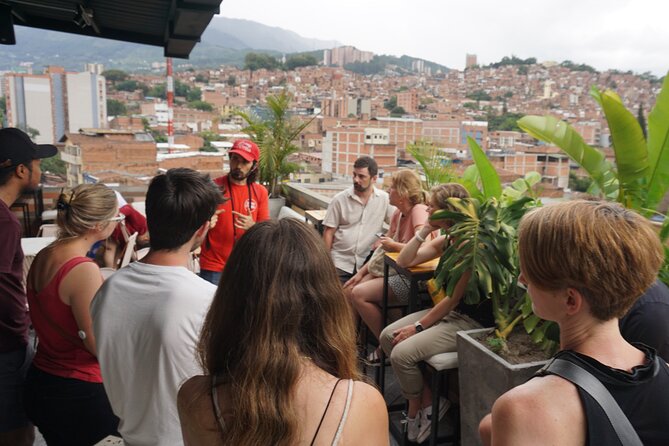
Medellín tells its story in public spaces, not monuments. This post-conflict shared walking tour follows a clear line of places that connect the city’s hardest years to education, community programs, human rights, and rebuilding the way people share neighborhoods.
I especially like that it’s short stops with big meaning. You also get a chance to understand the conflict through the social dynamics that shaped everyday life, not just a timeline. Guides you might meet—Paul, Miguel, Daniel, Manuel, Alejandro, or Sebastian—are typically praised for clarity and honest context.
One thing to consider: some stops are small and you’re there for the explanation more than the view. Also, the tour depends on the guide showing up on time; a rare bad day has been reported, so keep your booking info handy and double-check before you set off.
In This Review
- Key things to know before you go
- Price and value: $14 for a real guide-led story
- The route at a glance: San Antonio to Bicentenario (2:00 pm start)
- Stop 1: Parque San Antonio and the city’s turning points
- Stop 2: Plazuela San Ignacio and why education is peace work
- Stop 3: Comfama San Ignacio and culture that repairs the social fabric
- Stop 4: Torres de Bomboná and architecture as urban change
- Stop 5: Pasaje Cervantes and murals that turn corners into messages
- Stop 6: Parque de Boston for reflection (and a quick reset)
- Stop 7: Simona Duque Park and human rights as a living legacy
- Stop 8: Bicentenario Park and what Medellín calls its future
- How the guides make (or break) this tour
- What you should bring and how to plan your afternoon
- Who this tour is best for
- Should you book Violence & Post-Conflict with Paul and the Medellín route?
- FAQ
- Is the tour shared, and how many people are in the group?
- Where does the tour start and end?
- What time does the tour run?
- How much does it cost?
- Are admission tickets included for all stops?
- What’s included in the tour price?
- Are snacks or lunch included?
- Is there a cancellation window?
- Is the tour physically demanding?
Key things to know before you go
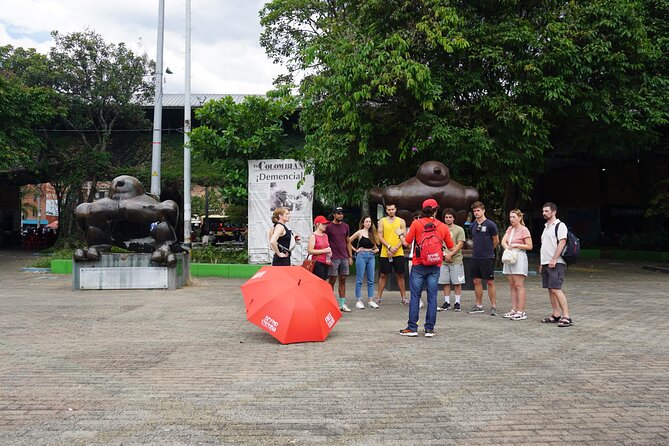
- Eight focused stops in about three hours keeps the pace manageable while still covering a lot of context.
- Education and culture are the through-line, from a school-centered square to a cultural center that supports peaceful coexistence.
- Street art and public space matter here; the murals in the passage aren’t decoration, they’re part of the rebuilding story.
- Architecture gets treated like social change, not just skyline. The Bomboná towers are a reference point for how Medellín looks today.
- Human rights are front-and-center with the Simona Duque tribute, tying the post-conflict theme to real people.
- Small group size (max 10) usually helps your guide keep it interactive and Q&A-friendly.
Price and value: $14 for a real guide-led story
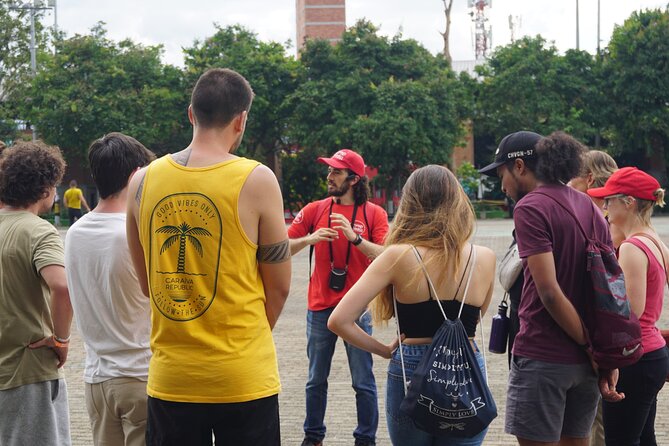
You’ll see a fixed price listed—$14 per person—and it’s essentially tied to the same idea as a tip-based walking tour. The key value point is that you’re not paying for attractions with a rigid script. You’re paying for a certified guide to connect ordinary corners of La Candelaria to the city’s violence and recovery.
For $14, you get a structured, 3-hour route and a focused explanation. If you’ve ever walked Medellín on your own and wondered what you’re supposed to notice, this kind of tour answers that fast. It turns parks, squares, passages, and a couple of modern sites into a guided lesson you can actually walk through.
We have more tours that tell the sober history of Pablo Escobar and how Medellin moved past it

The route at a glance: San Antonio to Bicentenario (2:00 pm start)
The tour meets at Parque San Antonio (Cl 44 #50, La Candelaria) and starts at 2:00 pm. It ends at the Memory House Museum area at Parque Bicentenario (Cl. 51 #36-66, La Candelaria).
Expect about 3 hours total, with short time blocks at each stop (around 22 minutes each). That format is deliberate: it keeps the story moving, so you don’t get stuck in one place waiting for the explanation to catch up.
Practical note: this is a shared tour with a maximum of 10 people, so it’s not a huge group shuffle. It also means you’ll likely hear your guide’s tone and answers, not just a distant lecture.
Stop 1: Parque San Antonio and the city’s turning points
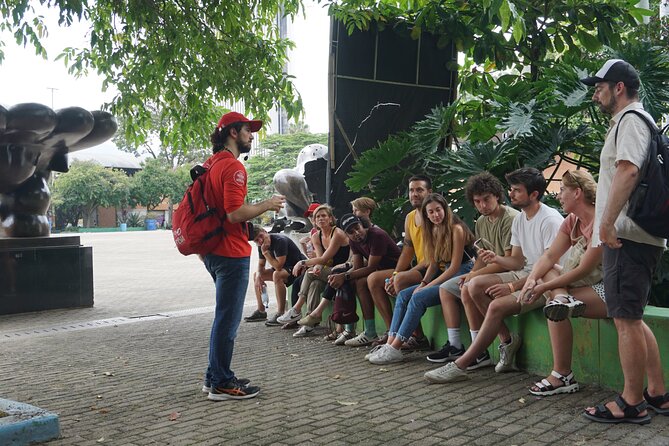
You begin at Parque San Antonio, one of those Medellín spots locals treat like a living room. It’s “emblematic” for a reason: the park acts like a time marker for the city, so you’ll hear how its role in daily life has changed over the years.
The useful angle here is that parks are never neutral. In post-conflict cities, public space often reflects what people feel safe doing: gathering, passing through, resting, celebrating, and arguing. You don’t need a view from a hill to understand that. You just need to understand what the park symbolizes and how that symbol shifted.
Stop 2: Plazuela San Ignacio and why education is peace work
Next up is Plazuela San Ignacio, where the theme narrows: education as a transformation tool. The tour treats schooling not as an abstract good, but as part of how peacebuilding gets built at street level.
Even if you’re not interested in education policy, you’ll probably appreciate the way the guide frames it. In a city shaped by violence, learning can become protection, routine, and long-term options. This stop is a reminder that recovery isn’t only about police and courts; it’s also about everyday opportunities that keep people from getting pulled back into harm.
Stop 3: Comfama San Ignacio and culture that repairs the social fabric
Then you’ll visit Comfama San Ignacio, a cultural center focused on art, culture, and education. This is where the tour shifts from “why it matters” to “what institutions actually do.”
What I like about this part is the way it connects creativity to community strength. Art programs and educational initiatives aren’t presented as soft extras. They’re positioned as tools that help rebuild trust and shared identity after conflict strains relationships.
If you’re the type who likes seeing how civic life works, this stop gives you a concrete example instead of just themes.
Stop 4: Torres de Bomboná and architecture as urban change
At Torres de Bomboná, you’ll hear about the history of these towers and why they became a modern reference point for Medellín. This stop is shorter than a full architectural tour, but it makes a strong point: architecture can signal how a city is rebranding itself, physically and emotionally.
Here’s the practical value for you: when you look at the city’s newer structures, you’ll start asking the right questions. Who benefits from the redesign? What does the city want you to feel when you pass by? And how does that connect to the post-conflict story you’ve been building since the first park?
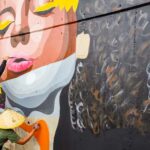
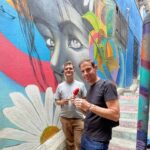
Stop 5: Pasaje Cervantes and murals that turn corners into messages
Pasaje Cervantes is the art stop, but it’s not random graffiti-watching. You’ll look at colorful murals and hear about the artists and the messages they communicate.
This is often the most memorable stop for people who like street art with context. You get a reason to care about what you’re seeing. Instead of thinking, “Nice colors,” you’re guided to think about the message, the public conversation, and how murals can reflect identity, memory, and hope.
One drawback you might notice: it’s a passage, not a big plaza. If you want dramatic scenery, you’ll get meaning more than spectacle. But that’s also the point—this tour builds understanding from details.
Stop 6: Parque de Boston for reflection (and a quick reset)
Parque de Boston gives you a breather. The guide invites you to share thoughts about what you’ve seen and learned so far. That short reflective break matters because the tour covers heavy themes without turning every stop into a lecture.
In my view, this is where the tour starts to click. You’re no longer just collecting facts. You’re connecting them: education, culture, rights, public space, and modern urban form—all part of one rebuilding process.
Stop 7: Simona Duque Park and human rights as a living legacy
Then you move to Simona Duque Park, a tribute to Simona Duque and her work fighting for human rights. This stop changes the emotional register of the tour because it centers on a person and a legacy, not just systems.
Keep in mind: the tour notes that admission for this stop is not included. That doesn’t mean you can’t visit. It means you should be ready for potential entry costs depending on how the site is run that day.
Also, listen carefully for the way the guide connects human rights work to post-conflict reality. This stop is where the violence-to-peace story gets grounded. You stop thinking only about “the city” and start thinking about the people who push back against injustice.
Stop 8: Bicentenario Park and what Medellín calls its future
You finish at Bicentenario Park, described as modern and sustainable—built to represent Medellín’s future. The guide wraps up the tour by tying the last stop back to the main theme: challenges and opportunities on the road to peace.
As a final note, admission for this stop is also not included. If you’re trying to keep costs tight, plan for that possibility so you don’t feel surprised at the end.
This ending location is a good choice because it turns your attention from the past into what the city is trying to build now. You leave with a sense of direction: post-conflict doesn’t mean “everything is fixed.” It means people keep reshaping public life toward something safer.
How the guides make (or break) this tour
This kind of tour lives and dies on the guide’s ability to explain complex history in plain language while walking you to the right places. In the experiences you’ll read about, guides like Paul have been praised for explaining complex local and national history, while Miguel and Daniel are noted for clear, honest storytelling about social dynamics.
One more detail I’d trust: when guides explain conflict honestly, you walk away with a better sense of why the city looks the way it does today. And when guides are less effective, the tour can feel like you spent 3 hours moving between minor-looking points. That’s why the format matters: you should come expecting conversation and interpretation, not just sightseeing.
Tip for you: ask questions early. If you want the most value, bring one topic you care about—education, art, political history, or how cities rebuild. A good guide will steer you toward the relevant stops.
What you should bring and how to plan your afternoon
This tour is near public transportation, which makes it easier to fit into an afternoon plan. You’ll also want strong physical fitness for a shared walking route. It’s not described as an extreme hike, but it is a walking tour, and Medellín streets can be uneven.
Because snacks and lunch aren’t included, plan for a snack before or after. It’s also smart to wear comfortable shoes. You’ll be standing, walking, and listening through eight stops, so your feet do the heavy lifting while your head absorbs the context.
Who this tour is best for
This tour is a great match if you want a guided way to understand Medellín’s transformation after violence. It’s also a good fit if you enjoy city storytelling that connects places to real themes: education, arts, human rights, and urban redesign.
If you’re looking for a tour where every stop is visually dramatic, you might find parts of it underwhelming. Some locations are more about meaning than scenery. The trade-off is that the guide’s explanation makes the stops worth your time.
Should you book Violence & Post-Conflict with Paul and the Medellín route?
I think it’s worth booking if you’re the kind of visitor who likes to understand how a city works and why it rebuilt the way it did. For a relatively low price, you’re paying for guided context that you’d struggle to piece together alone in a first visit.
Book it if:
- You want a peacebuilding story told through everyday places.
- You value education, culture, and human rights as part of history.
- You’re okay spending time listening, not just photographing.
Skip or reconsider if:
- You need “high spectacle” at every stop.
- You dislike tours that focus more on explanation than scenery.
- You’re sensitive to heavier historical themes without much warning.
FAQ
Is the tour shared, and how many people are in the group?
It’s a shared walking tour with a maximum of 10 travelers. That small size is part of what keeps the experience manageable and guide-led.
Where does the tour start and end?
It starts at San Antonio Park on Cl 44 #50, La Candelaria, Medellín. It ends at the Memory House Museum area at Parque Bicentenario, Cl. 51 #36-66, La Candelaria, Medellín.
What time does the tour run?
The start time listed is 2:00 pm, and the duration is approximately 3 hours.
How much does it cost?
The listed price is $14.00 per person.
Are admission tickets included for all stops?
Admission tickets are free for some stops, but tickets are not included for Simona Duque Park and Bicentenario Park. Plan for possible entry costs at those two locations.
What’s included in the tour price?
A certified guide is included.
Are snacks or lunch included?
No. Snacks and lunch are not included, and you’ll want to plan food around your schedule.
Is there a cancellation window?
Yes. Free cancellation is available up to 24 hours in advance for a full refund.
Is the tour physically demanding?
The tour notes a requirement of strong physical fitness level. It involves walking between stops, so come ready for that pace.
More Tours across Medellin and Antioquia
More Pablo Escobar History Tours in Medellin
More Medellin Tours and Experiences to Read Next
Not quite your thing? Here is more to do around Medellin, freshly reviewed


Pablo Escobar History Tours, compared.
 ★ 4.8The Real Pablo Escobar TourFrom $423,205 reviews
 ★ 4.7Pablo Escobar Tour with beer includedFrom $31612 reviews
 ★ 4.7Guatapé Day Trip & Boat to Pablo Escobar’s EstateFrom $64365 reviews
 ★ 4.9Private Pablo Escobar and Comuna 13 TourFrom $81233 reviews
 ★ 4.8Private Pablo Escobar Tour with Cable Car RideFrom $73228 reviews
 ★ 4.9From Medellín: Private Pablo Escobar History TourFrom $6384 reviews
 ★ 4.8Medellin Pablo Escobar TourFrom $5581 reviews
 ★ 5.0(Private Guatapé) Mansion Pablo Escobar+Paintball+Cuatrimoto+BoatFrom $23573 reviews
Browse the lists this tour appears in