
REVIEW · COMUNA 13 GRAFFITI & STREET ART TOURS
Comuna 4 Walking Tour Medellin
Moravia has a story few tours tell. On this Comuna 4 Walking Tour Medellín, I like how Toto and Gladys connect the Barrio Moravia origin story from the 60s to the very real fight over reallocation, and I also like the practical focus on health care access and education in the neighborhood. One consideration: the topics can feel heavy, and you’ll be walking through a real community, not a staged show.
This isn’t a sightseeing loop for photos. The tone is human. You start at Estación Metro Caribe, move uphill toward Morro de Moravia, and then work your way deeper into daily life, stopping to sit, talk, and listen as the neighborhood explains itself.
It runs about 3 hours 30 minutes for $35 per person, and the group is kept small (max 8). You get a professional bilingual guide, a local community leader, and a snack, with no hotel pickup. That small size and local leadership are a big part of the value.
In This Review
- Key things that make this Comuna 4 Moravia walk special
- Entering Comuna 4: Moravia is not a set piece
- Start at Estación Metro Caribe and get the neighborhood’s origin timeline
- Morro de Moravia: the reallocation debate and La Resistencia
- Centro de Salud Moravia El Bosque: welfare on paper vs access in real life
- Graffiti, clubs, and the meaning of football in the streets
- Fundación Oasis Urbano: education and the strata system
- Tiny street empanadas at E.I. Fe y Alegría – Luis Amigó
- The neighborhood pitch: resilience told through football and a local ambassador
- Moravia Cultural Center: how infrastructure gets built by the community
- Who this tour is best for (and who should think twice)
- Price and logistics: where the $35 really goes
- My practical packing and mindset tips
- Should you book the Comuna 4 Walking Tour Medellín?
- FAQ
- How long is the Comuna 4 Walking Tour Medellín?
- What is the price per person?
- What’s included in the tour?
- Is hotel pickup included?
- Where does the tour start, and is it near public transportation?
- Can most people participate, and are service animals allowed?
Key things that make this Comuna 4 Moravia walk special
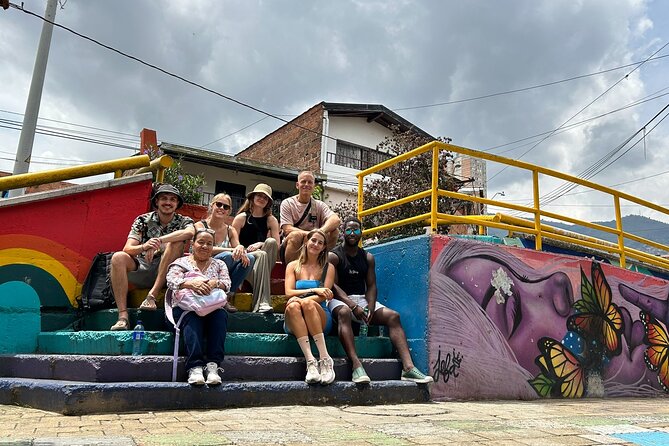
- You get a Moravia story from people who lived it with guides like Toto and community leaders such as Gladys
- The tour confronts two versions of Medellín’s transformation, including the part about families resisting government plans
- You stop to talk about the health care system in Colombia and how many people still don’t access it
- Football shows up everywhere, from graffiti for major teams to a local pitch and personal resilience stories
- You learn how education and the strata system work, while seeing how community projects operate on the ground
- A snack is built in, including tiny empanadas that become a highlight in their own right
Entering Comuna 4: Moravia is not a set piece
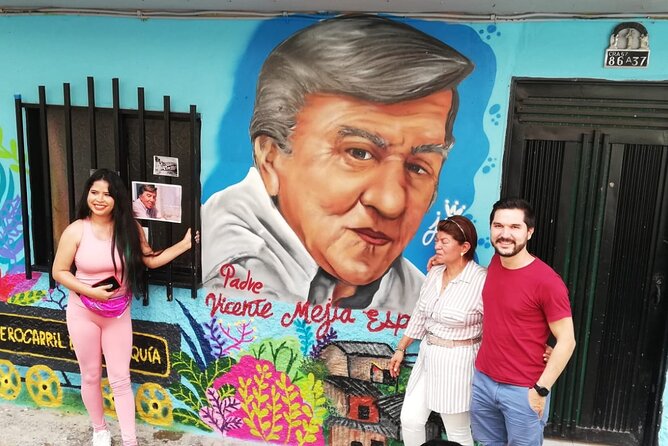
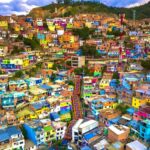
Comuna 4, and especially Barrio Moravia, is one of those places in Medellín where the history is not sitting in a museum. It’s in the streets, the community buildings, the conversations, and the ongoing debates about what development should mean.
What I like most is that the tour does not treat Moravia as a single story. You hear one version of Medellín’s transformation tied to improvement and change—but you also hear the version that gets less attention: families who resisted reallocation and kept pushing back for more than a decade. That matters because it makes the topic feel real, not just informational.
It also helps that the tour includes local leadership alongside the bilingual guide. When people like Gladys (a longtime resident) join the walking route, it turns facts into lived experience. You’re not just learning dates and policies. You’re hearing what those policies felt like from inside the neighborhood.
There is more Comuna 13 street art and graffiti to explore around Medellin
Start at Estación Metro Caribe and get the neighborhood’s origin timeline
The tour begins at Estación Metro Caribe, where your guide and the community ambassador meet you and set the framework. This first stop is about context: Barrio Moravia’s origins in the 60s as an illegal neighborhood, and then one version of what people mean when they say Medellín transformed.
This is a smart setup. Before you walk farther, you understand why people were there in the first place and why the neighborhood’s development has always been tied to power, land, and promises.
Practical note: the meeting point is near public transportation. That makes it easier to reach without hiring a taxi or arranging hotel pickup. The tour also ends back at the same meeting point area, so you don’t get stranded across town.
Morro de Moravia: the reallocation debate and La Resistencia
Next comes Morro de Moravia and La Resistencia de Moravia. This is where the tour gets more direct about conflict and choice. You’re asked to understand why hundreds of families resisted the government’s reallocation plan for more than a decade.
If you’re expecting a neat success story, this part may surprise you. It challenges the simple narrative that transformation is always one-way and always welcomed. Instead, you get a clearer picture of what gets decided on the outside, what gets negotiated, and what gets experienced by the people who actually live there.
This stop also makes the tour emotionally honest without becoming chaotic. You sit, you listen, and you learn how resistance can be both practical (protecting a community) and personal (protecting a way of life).
Centro de Salud Moravia El Bosque: welfare on paper vs access in real life
Deep in the neighborhood, you reach Centro de Salud Moravia El Bosque, where you pause in a quieter setting to talk through Colombia’s health care and welfare system.
The key idea here is the gap between what exists and who can use it. The tour explains why you see so many street vendors and asks a tough question: if there is a welfare system in place, why does almost half of Colombians still not have access to it?
This stop is valuable because it turns a visible part of daily street life into something you can understand. You’re not guessing. You’re getting an organized conversation that helps you connect economic survival, service access, and what people do when systems don’t reach them.
A gentle heads-up: if health care and inequality topics make you uncomfortable, this is the segment where that discomfort will show up. But if you want your Medellín experience to be grounded in real lives, this is one of the most useful stops.
Graffiti, clubs, and the meaning of football in the streets
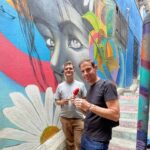
A short walk brings you to cigarreria la plaquita, where you’ll see graffiti dedicated to the city’s most important football teams. The point isn’t just that the art is colorful.
The point is cultural. Football is tied to identity, pride, and belonging, and the tour explains how the sport carries meaning in Colombian society. Seeing it painted into neighborhood spaces helps you understand that the community’s culture is not separate from its challenges. It’s part of how people keep meaning alive.
This stop is brief, but it works as a reset. After heavy topics, it gives you something more immediate and emotional—especially if you like soccer and enjoy reading how locals show pride.
See more downtown and Botero city tours across Medellin
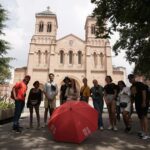
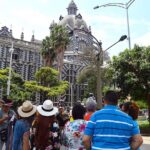
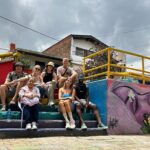
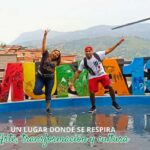
Fundación Oasis Urbano: education and the strata system
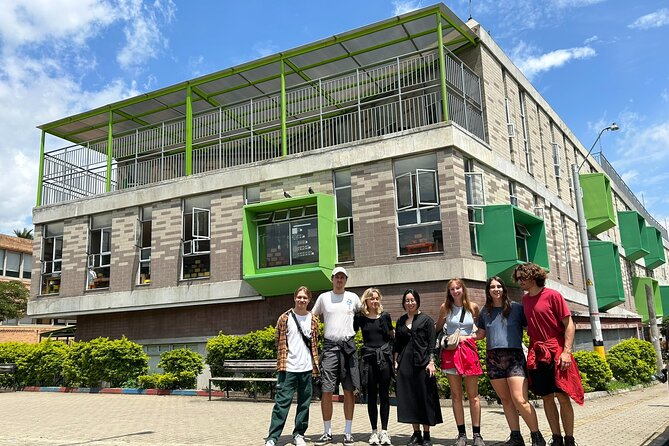
Later, you sit again in the shade of trees in front of Fundación Oasis Urbano. This is a thoughtful section of the tour where you explore education and the strata system in Colombia.
The strata system matters because it helps explain why life can look very different from block to block, even within the same city. Instead of treating social class as a vague idea, the tour connects it to how communities organize, how services land, and how opportunities can be uneven.
This part of the experience also connects to community-run projects. In the walk through this area, you may see improvements happening right now—projects connected to local education and support, including community efforts such as a women-run garden and La Casa de Todos (described as visible examples of change during the tour).
Tiny street empanadas at E.I. Fe y Alegría – Luis Amigó
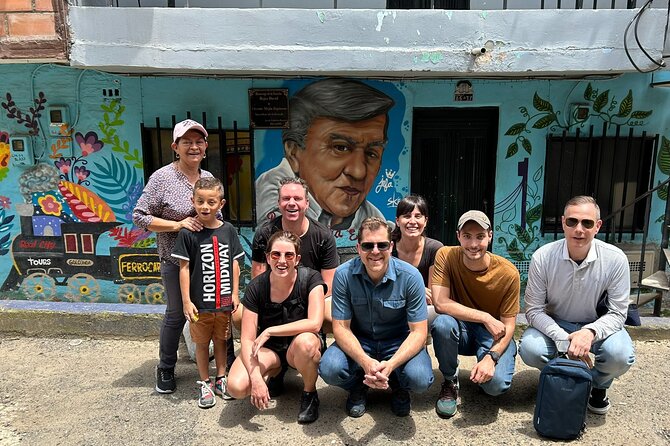
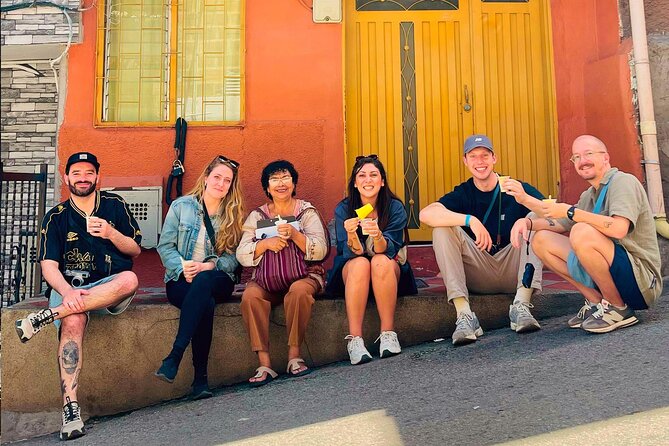
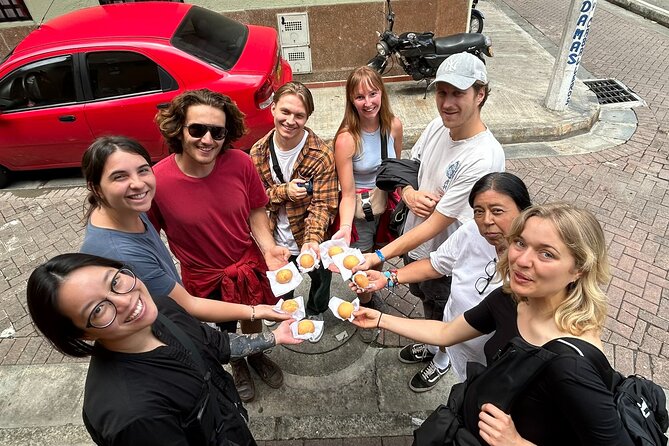
When the tour hits E.I. Fe y Alegría – Luis Amigó, you get one of the most straightforward joys: street empanadas. The focus here is simple and specific—tiniest yet delicious—and it’s served as a snack included in the tour.
This isn’t just food for comfort. Timing matters. A walking tour with long conversations can wear you out. The snack gives you a break that keeps the group moving and helps you stay present for the later parts.
If you have dietary needs, the tour info you have doesn’t specify options. I’d plan around the snack being a standard empanada stop and ask the provider what’s possible for your diet when you book.
The neighborhood pitch: resilience told through football and a local ambassador
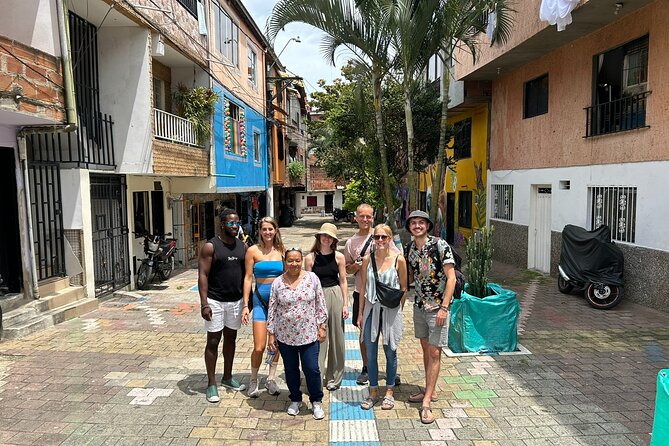
Next is a synthetic pitch in Moravia, where you see a football field and hear the story of resilience and hope from your local ambassador.
This segment works because it ties together themes you’ve already heard: resistance, community life, and identity. Football isn’t treated as a pastime only. It becomes a way of talking about perseverance and building something that keeps going.
It’s also a good moment to watch the neighborhood in action. Even without a big spectacle, you feel the difference between seeing a place from the outside and understanding what people do to sustain community energy.
Moravia Cultural Center: how infrastructure gets built by the community
The tour ends at the Moravia Cultural Center, where you visit the Centro Cultural. This is one of those stops that can change how you understand the word transformation.
Instead of hearing transformation only as government-led change, you see the community building infrastructure itself. The story focuses on how locals built the cultural space and why that kind of place matters.
From a travel value perspective, this ending makes the whole route land better. You leave with something more balanced than shock. Yes, you learned the hard origins and the resistance. But you also learned about what communities create with limited resources.
Who this tour is best for (and who should think twice)
This experience is best for you if:
- you want Medellín beyond the postcard version
- you like tours with local leadership that answer your questions plainly
- you’re open to topics like inequality, housing conflict, and access to services
- you enjoy walking tours and want to learn how people live, not just what happened in the past
It might be less ideal if:
- you prefer only light, purely scenic stops
- you don’t want emotional or political topics in the middle of your day
- you don’t like walking in tight neighborhood streets for about 3.5 hours
Because the tour keeps the group to a maximum of 8 travelers, it stays conversational. That’s a plus for people who ask questions, but it also means you’ll hear more of the guided discussion up close.
Price and logistics: where the $35 really goes
At $35 per person for about 3 hours 30 minutes, the value comes from more than the walk itself. You’re paying for:
- a professional bilingual guide
- a local community leader who helps shape the story
- a snack
- the chance to visit multiple community sites with time to sit and talk
What you don’t get is hotel pickup or drop-off. The tour starts at Barrio Moravia’s meeting area around Av. Regional #Calle 78, Castilla, Medellín, and you return there at the end. The upside is you can plan the rest of your day around public transit.
Also note the tour is often booked in advance (around 19 days on average). If you’re traveling in a busy season, book early so you get a spot in the small group.
My practical packing and mindset tips
This tour is as much about listening as it is about walking. I’d show up ready to ask respectful questions and accept that some answers may be uncomfortable.
For comfort, I’d wear shoes that handle uneven pavement and keep your day flexible for pauses, sitting stops, and slower streets. Bring a small water bottle if you like to stay hydrated during walks.
And mentally, come with the expectation that this isn’t a “crime tour” or a “poverty tour.” It’s about how a neighborhood fought for dignity, and how change can be complicated.
Should you book the Comuna 4 Walking Tour Medellín?
Book it if you want a Moravia experience with local voices and real context. This is the kind of tour that helps you understand why Medellín’s transformation isn’t one clean headline. You’ll get the origin story from the 60s, the reallocation resistance narrative, a discussion of health care access, football culture, and community-built infrastructure at the Moravia Cultural Center.
Skip it only if you want a purely touristic day with minimal emotional weight. Otherwise, this is one of the strongest ways to spend a half-day in Medellín when you care about people first.
FAQ
How long is the Comuna 4 Walking Tour Medellín?
The tour lasts about 3 hours 30 minutes on average.
What is the price per person?
The price is $35.00 per person.
What’s included in the tour?
It includes a local community leader, a professional bilingual tour guide, and a snack.
Is hotel pickup included?
No. There’s no hotel pickup or drop-off.
Where does the tour start, and is it near public transportation?
You meet at Barrio Transformation Tour, Av. Regional #Calle 78, Castilla, Medellín. It’s noted as being near public transportation.
Can most people participate, and are service animals allowed?
Most travelers can participate, and service animals are allowed. The tour also has a maximum of 8 travelers. Confirmation is received at booking, and free cancellation is available up to 24 hours in advance for a full refund.
More Medellin City and Botero Downtown Tours
More Comuna 13 Street Art and Graffiti Tours in Medellin
More Medellin Tours and Experiences to Read Next
Not quite your thing? Here is more to do around Medellin, freshly reviewed
Comuna 13 Graffiti & Street Art Tours, compared.
 ★ 4.8Comuna 13 Graffiti Tour, Cable Car & Street FoodFrom $189,046 reviews
 ★ 4.9Comuna 13 True Story and Street Food TourFrom $141,779 reviews
 ★ 4.8Comuna 13 District Tour with Cable Car RideFrom $271,467 reviews
 ★ 4.9Private City Tour with Metrocable and Comuna 13From $76330 reviews
 ★ 4.9Comuna 13 Tour with Snacks And Your Own GraffitiFrom $11311 reviews
 ★ 4.5City Tour + Commune 13 MedellinFrom $37295 reviews
 ★ 4.9Comuna 13 and Graffiti Guided Tour with a LocalFrom $16239 reviews
 ★ 4.9Private Pablo Escobar and Comuna 13 TourFrom $81233 reviews
Browse the lists this tour appears in