
REVIEW · PABLO ESCOBAR HISTORY TOURS
Pablo Escobar Tour in Medellin Private
This story is heavy, but the structure is clear. You’ll see drug-trafficking victims honored at Parque Memorial Inflexion, then move on to Pablo Escobar’s tomb and family at Jardines Montesacro. I also like how the tour ends at the exact place of his death, including time at the house location on the roof in Los Olivos. One drawback: it’s emotionally intense material, and you should expect a somber tone.
You’ll travel in a private, air-conditioned vehicle, which makes a big difference in Medellín’s traffic and heat. In the reviews, I noticed a theme around calm teaching and patient explanations from guides like Julian and Sofia, with a pace that doesn’t feel rushed. If you’re sensitive to memorial sites and the darker side of Medellín’s past, plan to slow down and take breaks when you need them.
If you’re pairing this with another neighborhood tour, you’ll get more of the city’s wider story. People often do this alongside Comuna 13, because you’re comparing how Medellín remembers trauma and resilience in different ways. This is also a great fit if you want a private experience that stays focused on what you’re seeing, not just driving past it.
In This Review
- Key things you’ll notice on this Pablo Escobar private tour
- What this tour is really about: truth, memory, and public space
- Timing and pacing: why the 3h30 format works
- Stop 1: Parque Memorial Inflexion and the victims-focused message
- Stop 2: Cementerio Jardines Montesacro and the tomb context
- Stop 3: Barrio Pablo Escobar, houses, and the mural effect
- Stop 4: Los Olivos and the house where Pablo Escobar died
- Value and price: what $85 buys you in Medellín
- Guides and group feel: why private can change everything
- Pairing tip: how to connect this tour to Comuna 13
- What to bring and how to get the most from it
- Should you book the Pablo Escobar Tour in Medellín?
Key things you’ll notice on this Pablo Escobar private tour
- A memorial-first start at Parque Memorial Inflexion that divides the message into three parts tied to victims from the 80s and 90s
- Cemetery time at Jardines Montesacro including the tomb of Pablo Escobar and part of his family, with admission included
- Barrio Pablo Escobar context about roughly 250 houses he gave away, plus a mural honoring him
- The end point is where he died at a house location in Los Olivos, with admission free
- Private transportation in an air-conditioned vehicle so you spend more time on-site and less time stuck in discomfort
What this tour is really about: truth, memory, and public space
A Pablo Escobar tour can easily turn into spectacle. This one aims for something more grounded. You’re not just seeing famous places; you’re walking through Medellín’s public memory of the drug era—where the pain is acknowledged, where the story is fixed in stone, and where it shows up in a neighborhood’s walls.
That matters because the Medellín you experience here is not only about one man. It’s about the people impacted in the 80s and 90s, the way a cemetery carries a private story in a public setting, and how a barrio ends up marked by a mural and local lore. If you want context while you travel, the private format helps: you can ask questions and keep your attention on what’s in front of you.
And it’s not a full-day marathon. Plan for about 3 hours 30 minutes, which is long enough to cover four distinct stops, but short enough that you won’t feel trapped in a long loop of heavy material.
We have more tours that tell the sober history of Pablo Escobar and how Medellin moved past it

Timing and pacing: why the 3h30 format works
The route is built around four stops with set time blocks:
- Parque Memorial Inflexion (about 50 minutes)
- Cementerio Jardines Montesacro (about 40 minutes)
- Barrio Pablo Escobar (about 50 minutes)
- House location where Pablo Escobar died in Los Olivos (about 1 hour)
In practice, this kind of timing is valuable because it prevents two common problems. First, you don’t get stuck at a single site so long that it becomes numb. Second, you don’t rush past places that deserve a slower look—especially memorial and cemetery areas.
The reviews also point to guides who pace learning in a way that feels manageable. You’ll likely notice a calmer rhythm: explanations, time to look, then another stop. For many people, that pacing is what turns a tour from just photos into something you actually understand.
Stop 1: Parque Memorial Inflexion and the victims-focused message
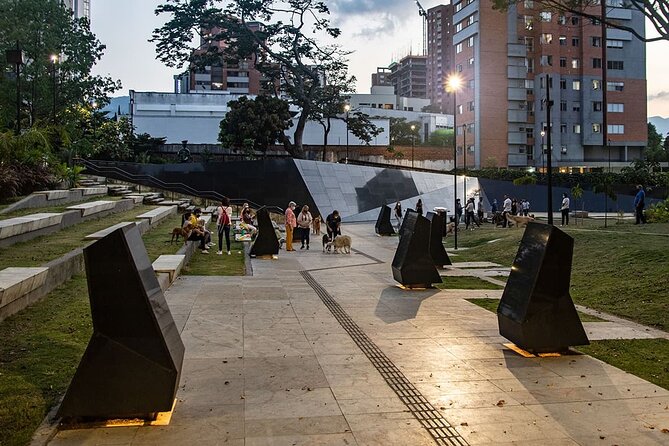
This is your entry point, and it sets the tone. Parque Memorial Inflexion is divided into three sections, built in memory of victims of drug trafficking in the 80s and 90s. That design choice is more than architectural—it’s a way to structure grief and context, instead of treating the era like an abstract legend.
Why this stop is so important:
- You get reminded early on that the victims are the center of the story.
- The three-section layout helps you keep track of what you’re learning, instead of losing the thread.
- Having admission included means you don’t scramble for tickets once you arrive.
What to consider:
This is a memorial. You’ll be in a space that asks for respect and quiet attention. If your brain likes to go into distraction mode when things get uncomfortable, you’ll probably need to “stay present” on purpose here.
Stop 2: Cementerio Jardines Montesacro and the tomb context
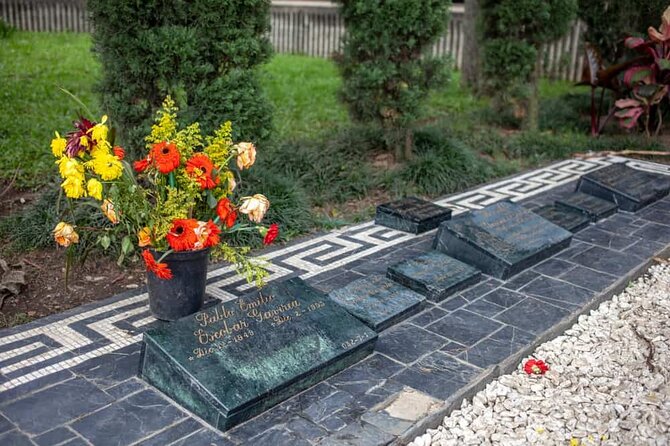
Next comes Cementerio Jardines Montesacro, where you’ll visit the tomb of Pablo Escobar and part of his family. The time on-site is about 40 minutes, and admission is included.
A cemetery stop changes the story’s texture. At a memorial park, you see the era through collective remembrance. Here, you encounter the way the story is preserved through personal markers—stone, names, and the physical fact of who is remembered and how.
Why this stop lands differently:
- It’s concrete. You can’t turn it into a movie scene.
- It forces the tension in the subject: infamy next to grief, and legend next to the reality that families and communities still live with consequences.
One consideration: cemeteries can be emotionally draining, even if you’re there for history or context. Wear comfortable shoes and keep your energy steady for the next sites.
Stop 3: Barrio Pablo Escobar, houses, and the mural effect
After the cemetery, the tour moves to Barrio Pablo Escobar. This is where the story becomes part of everyday neighborhood space.
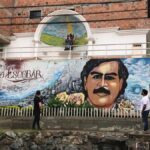
You’ll spend about 50 minutes here, learning what the neighborhood is like and seeing a mural in honor of him. The tour also references how Escobar gave away some 250 houses, which is a specific detail that helps explain why his image stuck around in parts of Medellín even after the violence.
Why this stop matters:
- It shows how impact and myth can coexist in the same place.
- It helps you understand how local memory works—some people frame him through aid and visible gestures, while the broader consequences are still acknowledged elsewhere on the route.
- The mural gives you something visual to interpret: how a community chooses what to display.
Possible drawback: this stop can feel like the sharpest contrast point. If you’re coming from the memorial park and cemetery, you may feel whiplash when you shift to a neighborhood space marked by a larger-than-life image. That contrast is exactly why it’s included—but you should be ready for it.
More private tours to shape around your own pace in Medellin




Stop 4: Los Olivos and the house where Pablo Escobar died
The tour ends at Medellín, at the house where Pablo Escobar died, located on the roof of a house in the Los Olivos neighborhood. You get about 1 hour here, and admission is free.
This is the stop that many people picture when they think about Escobar tours: the ending. But what you get here can be more useful than a dramatic retelling, because the previous stops build the emotional and moral context first. By the time you arrive, you’re not only thinking about the chase. You’re thinking about consequences.
Why it works as a finale:
- The tour is already anchored in remembrance, so the final stop lands as closure rather than entertainment.
- You can connect the story’s public footprint—memorial, cemetery, neighborhood markings—to its final physical location.
One practical note: since this stop involves being at a roof location, pay attention to comfort and footing. If you’re not keen on standing for an extended period in an uneven or exposed spot, let your guide know so the group can move at your pace.
Value and price: what $85 buys you in Medellín
At $85 per person for about 3 hours 30 minutes, this isn’t a budget gamble. The main value driver is the private format with transportation in an air-conditioned vehicle, plus admission included at the first three stops.
Here’s how that adds up in plain terms:
- You’re paying for guided context, not just entry tickets.
- You’re paying for time saved and comfort gained with private transport (no crowded shuffle, no waiting around for strangers).
- Admission is included at Parque Memorial Inflexion, Jardines Montesacro, and Barrio Pablo Escobar; the final house location is free.
Lunch is not included. That matters because if you book this on a day with one major meal stop, you’ll want to plan food before or after the tour so you don’t feel pressed. The good news is the tour length is short enough that it usually fits neatly into a half-day plan.
Also, this experience is booked fairly in advance—on average about 24 days ahead. If you have fixed dates, don’t wait too long.
Guides and group feel: why private can change everything
Because this is a private tour where only your group participates, the experience can feel more like a conversation with structure. In the reviews, guides such as Julian and Sofia are mentioned for being patient and personable, with explanations that keep the pace comfortable.
That matters if you want more than a checklist. You’ll likely benefit most if you’re the type of traveler who asks questions or wants to understand why a site is presented a certain way.
Who tends to love this format:
- Couples and small groups who want control over pace
- Travelers who want context, not just photos
- Anyone looking for a guided path through intense subject matter
If you prefer to be silent and independent, a private guide might feel like extra talking. Still, you can usually adjust by focusing your questions at the moments that matter most.
Pairing tip: how to connect this tour to Comuna 13
If you’re thinking about adding another Medellín experience, consider pairing this with Comuna 13. The reason is simple: you’re connecting how Medellín tells its story in different spaces.
- Here, you’re guided through remembrance and marked locations tied to the drug era.
- Comuna 13 often gives you a wider view of how communities rebuild and reframe their identity over time.
Even if you don’t love historical topics, pairing a memorial-and-neighborhood story with a broader community-focused one can make the day feel balanced.
What to bring and how to get the most from it
You don’t need special gear, but a few practical choices help you get more out of the time:
- Wear comfortable shoes. Memorial and cemetery areas involve time standing and walking.
- Bring water for the day. The vehicle is air-conditioned, but you may be outside at multiple stops.
- Have room in your schedule for quiet after. This type of tour can stick with you longer than a typical sightseeing loop.
- If you’re sensitive to heavy subjects, mentally pre-plan where you can pause—before you get stuck forcing yourself to “push through.”
Your goal isn’t to speed through the story. It’s to understand it while you’re there.
Should you book the Pablo Escobar Tour in Medellín?
Book it if:
- You want a private, guided walkthrough of key sites tied to Escobar’s impact and Medellín’s memory
- You like your tours structured with real stops—memorial park, cemetery, neighborhood, and the death location—rather than generic storytelling
- You appreciate context and are okay with a serious, somber tone
Skip it or think twice if:
- You’re looking for light entertainment or purely iconic photo spots
- You know you struggle with emotionally heavy sites like memorials and cemeteries
For most people who want an honest, guided look at one of Medellín’s most difficult chapters, this tour is a strong value. You’ll leave with a clearer understanding of how the city remembers—through design, names, and even murals—long after the headlines faded.
More Tours across Medellin and Antioquia




More Pablo Escobar History Tours in Medellin
More Medellin Tours and Experiences to Read Next
Not quite your thing? Here is more to do around Medellin, freshly reviewed




Pablo Escobar History Tours, compared.
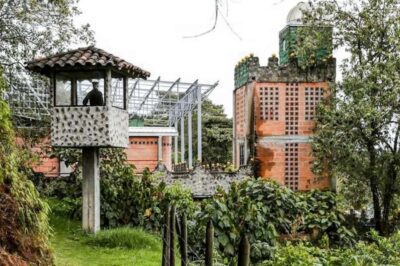 ★ 4.8The Real Pablo Escobar TourFrom $423,205 reviews
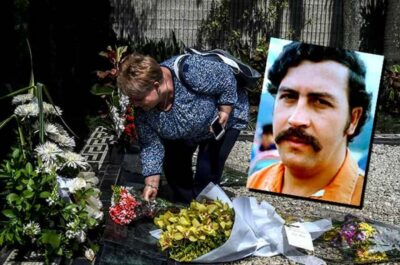 ★ 4.7Pablo Escobar Tour with beer includedFrom $31612 reviews
 ★ 4.7Guatapé Day Trip & Boat to Pablo Escobar’s EstateFrom $64365 reviews
 ★ 4.9Private Pablo Escobar and Comuna 13 TourFrom $81233 reviews
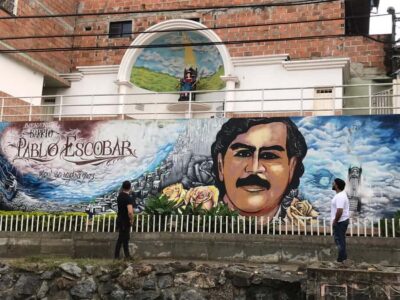 ★ 4.8Private Pablo Escobar Tour with Cable Car RideFrom $73228 reviews
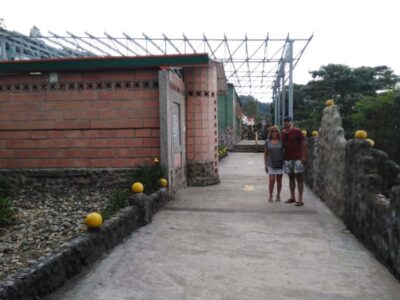 ★ 4.9From Medellín: Private Pablo Escobar History TourFrom $6384 reviews
 ★ 4.8Medellin Pablo Escobar TourFrom $5581 reviews
 ★ 5.0(Private Guatapé) Mansion Pablo Escobar+Paintball+Cuatrimoto+BoatFrom $23573 reviews
Browse the lists this tour appears in